The Fatimid dynasty in Aswan gives travelers a different way to understand this famous Nile city. Most visitors come to Aswan for Philae Temple, Abu Simbel, Nubian villages, and peaceful river views. However, the city also holds an important Islamic heritage story that many travelers miss.
Aswan was not only a Pharaonic city. It also played an active role in Islamic Egypt. Because of its location near Nubia and southern trade routes, Aswan remained important long after the age of temples and obelisks.
Today, visitors can still see this history through the Fatimid Cemetery in Aswan, also called the Islamic Necropolis of Aswan or Aswan Cemetery. This quiet heritage area includes mud-brick tombs, domed mausoleums, old shrines, and sacred burial spaces.
The Fatimid dynasty ruled Egypt from the 10th to the 12th century. Although they made Cairo their capital, their influence reached far into southern Egypt. In Aswan, their legacy appears most clearly in historic cemeteries, domed tombs, and religious monuments connected with early Islamic burial traditions.
This guide explains who the Fatimids were, why Aswan mattered during Islamic history, what Fatimid places you can see in Aswan, and how you can add this hidden heritage site to your Nile cruise itinerary.
Fatimid Dynasty in Aswan: Quick Facts for Visitors
| Topic | Details |
|---|---|
| Main Fatimid period in Egypt | 969–1171 AD |
| Main Fatimid-linked place in Aswan | Fatimid Cemetery / Islamic Necropolis of Aswan |
| Location | Eastern or southern side of Aswan, near the Nubian Museum area |
| Type of site | Historic Islamic cemetery, tombs, mausoleums, and shrines |
| Main material | Mud brick, with baked brick in some domes and arches |
| Key features | Domes, mihrabs, vaulted spaces, lime plaster remains, shrine structures |
| Best for | History lovers, architecture lovers, cultural travelers, Nile cruise guests |
| Visitor note | The site includes sacred cemetery areas, so visitors should act respectfully |
Who Were the Fatimids?
The Fatimids ruled a powerful Islamic empire across North Africa and parts of the Middle East. They took their name from Fatimah, the daughter of the Prophet Muhammad, because they claimed descent from her family line.
They followed Ismaili Shi‘a Islam. As a result, they presented themselves as both political rulers and religious leaders. This position separated them from the Sunni Abbasid caliphs in Baghdad, who became their main rivals.
The Fatimid state began in North Africa in 909 AD. Later, in 969 AD, the Fatimids conquered Egypt. Soon after that, they founded Cairo as their new capital.
Cairo quickly became the heart of the Fatimid empire. Moreover, it grew into one of the greatest cities of the medieval Islamic world. The Fatimids built mosques, palaces, city gates, shrines, and religious schools. They also supported trade routes through the Mediterranean, the Red Sea, and the Nile Valley.
Most travelers connect Fatimid monuments with Cairo. For example, Al-Azhar Mosque, Al-Hakim Mosque, Al-Aqmar Mosque, and the old city gates all reflect Fatimid power in the capital.
However, Aswan also keeps an important part of this story. Its Fatimid heritage looks quieter and more local than Cairo’s grand stone buildings. Still, it gives visitors a powerful view of Islamic life, faith, and burial traditions in southern Egypt.
Why the Fatimid Dynasty in Aswan Matters
Aswan has always meant more than beautiful Nile views.
In ancient times, the city served as Egypt’s southern gateway. It connected the Nile Valley with Nubia, African trade routes, desert paths, stone quarries, and military roads. Later, during the Islamic period, this role continued.
Because Aswan stood near Egypt’s southern border, it mattered to every major ruler who wanted to protect the Nile Valley. The Fatimids also understood this. They ruled from Cairo, but they needed southern Egypt to remain stable, connected, and active.
In addition, Aswan connected travelers, traders, soldiers, religious communities, and local families. The Nile linked the city with Upper Egypt, Cairo, and the wider Mediterranean world. Therefore, Aswan became part of a larger Islamic network.
The cemeteries of Aswan show this long Islamic history. Some burials may belong to early Islamic periods before the Fatimids. Other tombs connect with the Fatimid era and later periods. For this reason, the site feels layered, complex, and historically rich.
So, instead of seeing the cemetery as a simple “Fatimid-only” attraction, visitors should understand it as an early Islamic and Fatimid-period necropolis that continued to grow over later centuries.
The Main Fatimid Place in Aswan: Fatimid Cemetery
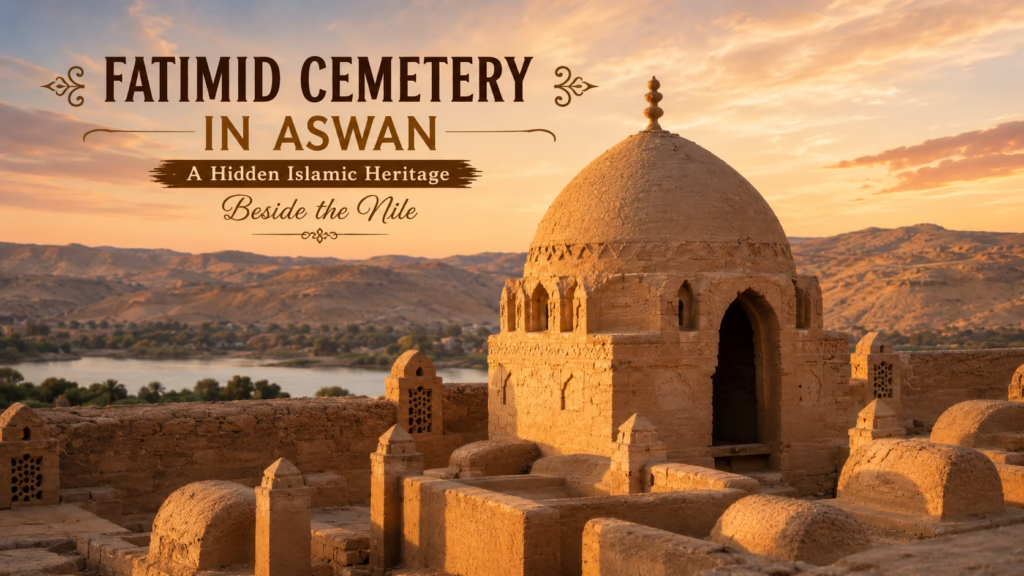
The Fatimid Cemetery in Aswan stands as the most important Fatimid-linked place in the city.
Travelers and historians also use other names for it, including:
- Aswan Cemetery
- Islamic Cemetery of Aswan
- Islamic Necropolis of Aswan
- Aswan Necropolis
- Fatimid Tombs of Aswan
These names often refer to the same wider cemetery area or related parts of it. Some sources divide the cemetery into northern and southern sections. Meanwhile, many visitors focus mainly on the southern part, which people often call the Fatimid Cemetery.
The cemetery sits close to the modern city and near the Nubian Museum area. Because of this location, travelers can include it in a half-day cultural tour of Aswan.
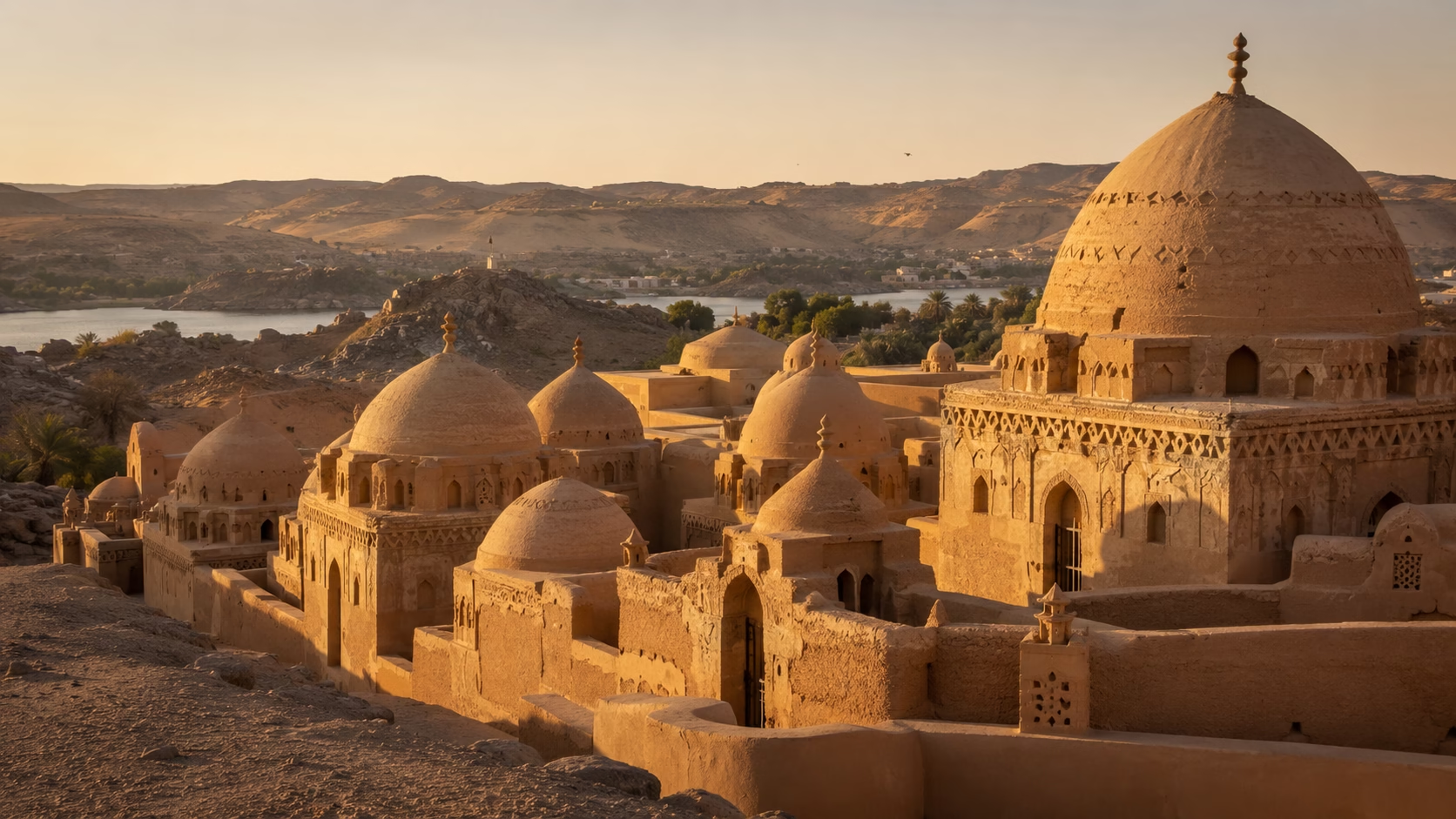
Unlike Philae Temple or Abu Simbel, the Fatimid Cemetery does not greet visitors with giant columns, carved walls, or large tourist crowds. Instead, it offers a quiet landscape of earth-colored domes, sun-baked walls, simple tombs, and historic mausoleums.
Some structures still stand clearly. Others show signs of age and partial ruin. Nevertheless, this atmosphere gives the site its special character.
The cemetery does not impress through size. Rather, it speaks through silence, memory, shape, and age.
Why the Fatimid Cemetery in Aswan Is Important
The Fatimid Cemetery in Aswan matters for several reasons.
First, it ranks among the oldest Islamic cemetery areas in Egypt and the wider Muslim world. It includes tombs and structures from different Islamic periods. Some parts connect with early Islamic burial traditions. Meanwhile, many famous domed structures reflect Fatimid-period architecture.
Second, the cemetery shows how Islamic funerary architecture developed in Egypt. The domes carry special value because they show early attempts to place domes above mausoleums in Egypt.
Third, the cemetery connects Aswan to the wider story of Islamic Egypt. Many travelers visit Aswan only for ancient Egyptian monuments. However, this cemetery reminds visitors that the city remained active and meaningful long after the age of the Pharaohs.
Finally, the site carries local spiritual value. Some tombs connect with saints, religious figures, and family memory. Therefore, the cemetery does not work only as an archaeological site. It also forms part of Aswan’s living heritage.
What You Can See at the Fatimid Cemetery in Aswan
The Fatimid Cemetery includes different types of tombs and buildings. Some look simple, while others show more careful design.
During your visit, you may see:
- Small rectangular tomb enclosures
- Mud-brick mausoleums
- Domed burial chambers
- Vaulted structures
- Tombs with mihrabs
- Shrine-like buildings known as mashhads
- Traces of plaster
- Arched entrances
- Damaged but beautiful dome forms
- Local graves from later periods
This mix matters because it shows how the cemetery developed over time. Builders did not create the site in one single phase. Instead, the cemetery grew through many generations.
Some tombs look plain and modest. Others show stronger architectural planning. In particular, the domed tombs create the most striking visual impression. Their rounded forms rise from square or rectangular bases and create a powerful silhouette against the Aswan sky.
Moreover, the mud-brick color blends beautifully with the desert landscape. At sunrise or late afternoon, warm light can make the domes look almost golden.
Fatimid Tomb Architecture in Aswan
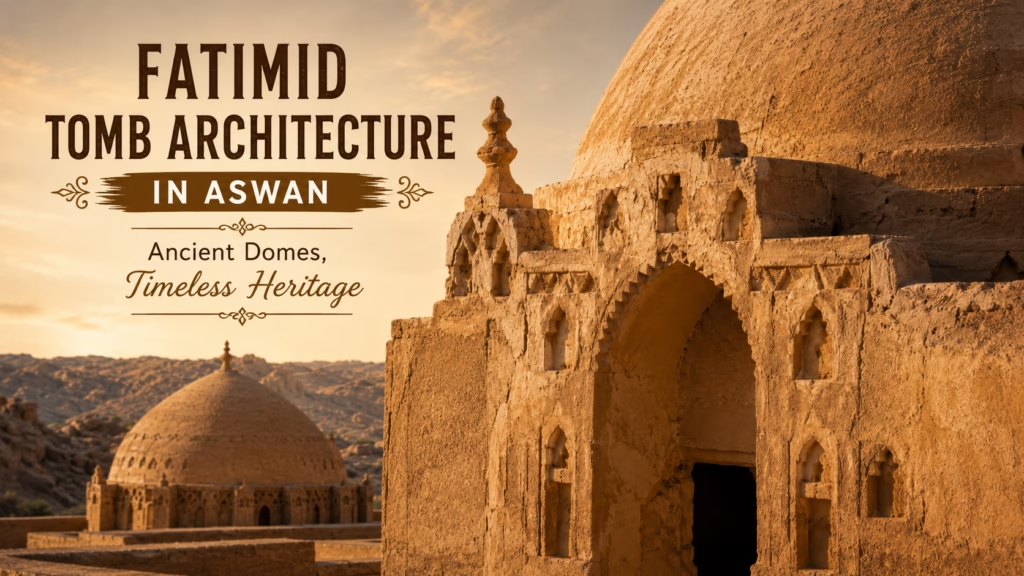
The architecture of the Fatimid Cemetery gives visitors one of the best reasons to visit.
Builders used mud brick for most tombs. This material suited the local environment and matched common building traditions in Upper Egypt. In some places, builders also used baked brick, especially in domes and arches.
Many tombs once carried lime plaster. Over time, however, the sun, wind, and age removed much of it. Even so, the remaining structures still show important features of Islamic funerary architecture.
Domes in the Fatimid Cemetery
The domes create the most famous feature of the cemetery. They rise above tomb chambers and mark sacred burial spaces.
Some domes look simple and rounded. Others use more complex transitions between the square room below and the circular dome above. This transition from square to dome challenged many Islamic builders. Therefore, Aswan’s tombs help visitors see early solutions to this architectural problem.
For photographers, the domes create strong shapes. For historians, they show how Islamic burial architecture spread into southern Egypt. For travelers, they offer a quiet break from the busy temple route.
Mihrabs Inside Fatimid Tombs
Some tombs include mihrabs. A mihrab is a niche that shows the direction of prayer toward Mecca.
This feature gives the tombs a clear religious character. However, visitors can easily miss it if they walk too quickly. For that reason, a local guide can help identify these details and explain their meaning.
Arches and Vaults in Aswan’s Islamic Necropolis
Several tombs use arches and vaults. These features strengthen the structure and shape the interior space.
In addition, they show how builders used simple materials with skill. The cemetery does not depend on polished stone for beauty. Instead, it depends on earth, brick, light, shadow, and form.
Decorative Traces in Fatimid-Period Structures
Some Fatimid-period structures include traces of decorative transition elements such as muqarnas. Islamic architects often used muqarnas to move visually from one surface to another, such as from a wall to a dome.
Although damage has hidden much of the original decoration, the remaining forms still help scholars understand how early Islamic architecture developed in Upper Egypt.
Northern and Southern Areas of Aswan Cemetery
Historians often describe Aswan Cemetery as having two main areas: a northern cemetery and a southern cemetery.
The southern part attracts special attention because many people connect it with the Fatimid Cemetery. Visitors often notice this area because of its domed tombs and its position near modern landmarks such as the Nubian Museum.
Over time, the cemetery landscape has changed. Roads, modern buildings, hotels, and urban growth have affected the area. Some monuments disappeared in the past. Others still remain visible today.
Because of these changes, the site feels both important and fragile.
When you visit, remember that you are not walking through a perfectly preserved open-air museum. Instead, you are seeing the remains of a long-used cemetery that has survived centuries of weather, urban expansion, and changing patterns of use.
This survival gives the site part of its value.
Important Shrines and Mausoleums in Aswan’s Fatimid Cemetery
The cemetery area includes several important buildings and shrines. However, names may appear in different spellings because writers transliterate Arabic names into English in different ways.
Important monuments connected with the cemetery include:
- The dome of the seventy-seven walis
- The mashhad of al-Sharif Hassan
- The mashhad of al-Sharif Hedra
- The shrine or mausoleum of Abbasa bint Khadyj
- The al-Sada al-Ga’afera shrine group
- The shrine of Zainab bint al-Hanafyya
- The shrine of Sayyida Aamna
These places show that the cemetery served more than one purpose. It worked as a burial ground, but it also became a sacred landscape. In addition, it held memory, religious respect, and local stories.
Some names connect with saints or holy figures. Others may connect with family lineages and religious identity. Therefore, visitors should treat the site with care.
Do not walk over graves. Also, do not touch fragile walls. If local people are praying or visiting graves, ask before taking photos.
Why the Domes of Fatimid Aswan Feel Special
The domes of the Fatimid Cemetery do not rise like the large domes of later Cairo monuments. They look smaller, earthier, and more intimate.
That difference makes them special.
Cairo gives visitors the grand official face of the Fatimid dynasty. By contrast, Aswan gives visitors something more local and human. The domes show how Islamic architectural ideas reached regional communities and adapted to local materials.
Moreover, the domes show how builders worked with Aswan’s climate. The city has a dry and hot environment. Mud brick can survive for long periods in dry conditions. However, water, humidity, groundwater, and careless development can damage it.
As a result, the cemetery’s domes feel both strong and fragile. They have survived for centuries, but they still need protection.
Fatimid Cemetery and Living Heritage in Aswan
The Fatimid Cemetery does not work only as an archaeological site. It also forms part of Aswan’s living heritage.
Local people may still visit graves, remember family members, or show respect to religious figures connected with the cemetery. Some tombs may also carry flags or signs of local devotion.
This creates a different experience from ancient temple sites. At Philae Temple, visitors mostly look at a monument from the distant past. At the Fatimid Cemetery, however, they may feel the past and present sitting together.
Because of this, respectful behavior matters.
A good visitor does not treat the site like an abandoned ruin. Instead, a good visitor treats it as a historic and sacred place.
Fatimid Cemetery in Aswan vs. Other Aswan Attractions
Aswan has many famous sites. However, the Fatimid Cemetery gives travelers something different.
Fatimid Cemetery vs. Philae Temple
Philae Temple stands as a major ancient Egyptian temple complex connected with Isis. It feels monumental, scenic, and popular.
The Fatimid Cemetery feels quieter and less crowded. It connects with Islamic history, burial architecture, and local heritage.
Both sites tell different chapters of Aswan’s story. Therefore, travelers who visit both places understand the city in a richer way.
Fatimid Cemetery vs. Unfinished Obelisk
The Unfinished Obelisk shows ancient stone-working skill. It helps visitors understand how ancient Egyptian workers shaped giant monuments.
The Fatimid Cemetery, on the other hand, shows mud-brick Islamic construction. It helps visitors understand a later period of Aswan’s history.
One site tells a story of stone and royal ambition. The other tells a story of earth, faith, and memory.
Fatimid Cemetery vs. Nubian Museum
The Nubian Museum gives visitors one of the best cultural experiences in Egypt. It explains Nubian history, art, and identity.
The Fatimid Cemetery sits nearby, so travelers can combine both places in one visit. As a result, this pairing helps visitors understand Aswan as a layered city, not just a temple stop.
Fatimid Cemetery vs. Aga Khan Mausoleum
The Aga Khan Mausoleum stands on the west bank of the Nile as a modern 20th-century monument. It connects with the Ismaili community and reflects inspiration from earlier Islamic and Fatimid architectural forms.
However, it does not belong to the medieval Fatimid dynasty period.
The Fatimid Cemetery gives travelers the more direct historic connection to Fatimid-period heritage in Aswan.
Aga Khan Mausoleum and the Fatimid Legacy in Aswan
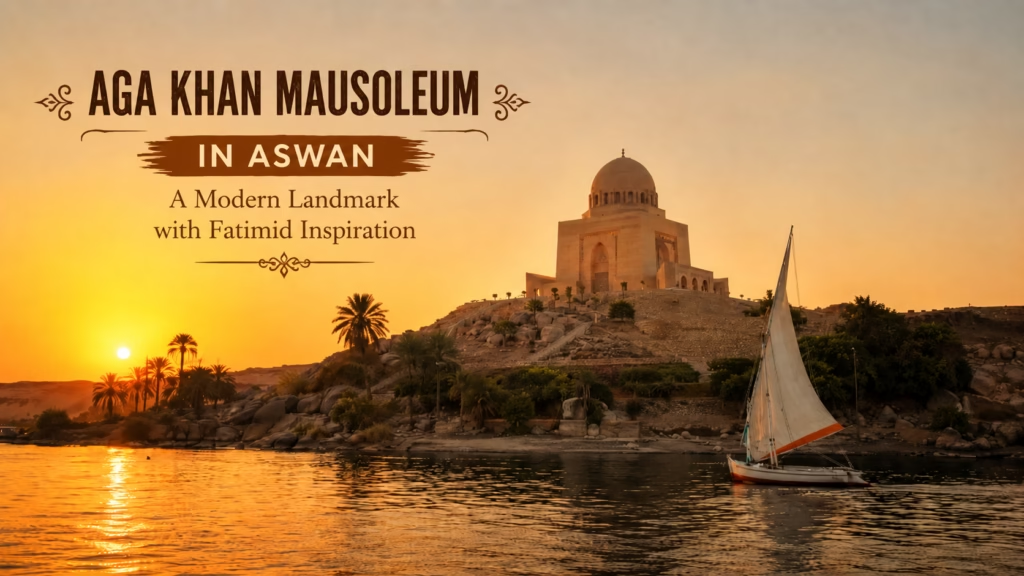
Many travelers ask whether the Aga Khan Mausoleum counts as a Fatimid place in Aswan.
The answer needs care.
The Aga Khan Mausoleum does not date back to the Fatimid period. Builders created it in the 20th century for Aga Khan III, the 48th Imam of the Nizari Ismaili Muslims. Today, it stands on the west bank of the Nile and remains one of Aswan’s most recognizable modern monuments.
Its connection to the Fatimids comes through culture, religion, and architectural inspiration rather than age.
The Fatimids followed Ismaili Shi‘a Islam. The Aga Khan lineage also connects with Ismaili history. Because of that, the mausoleum holds meaning within the wider Ismaili world. In addition, its design reflects inspiration from Islamic and Fatimid architectural traditions.
Most travelers admire the mausoleum from the Nile by boat. Interior access usually remains restricted, so visitors often see it from outside or from the river.
For accurate travel writing, describe the Aga Khan Mausoleum as a modern Ismaili and Fatimid-inspired landmark. Do not describe it as an original medieval Fatimid monument.
Best Way to Visit the Fatimid Cemetery in Aswan
The Fatimid Cemetery does not work like Philae Temple or the Nubian Museum, where visitors usually follow a clear tourist route. Therefore, a knowledgeable local guide can make the visit much better.
A guide can help you:
- Identify the main tombs and domes
- Understand the difference between older and later graves
- Explain the meaning of mausoleums and mashhads
- Avoid walking in sensitive areas
- Respect local religious customs
- Connect the cemetery with the wider history of Aswan
For the best experience, visit early in the morning or late in the afternoon. The light becomes softer, the heat feels lower, and the tombs look more beautiful.
Avoid the middle of the day, especially in summer. Aswan can feel extremely hot, and the cemetery offers little shade.
Practical Tips for Visiting Fatimid Sites in Aswan
Use these simple tips when visiting the Fatimid Cemetery and nearby Islamic heritage places in Aswan.
Dress Modestly at the Fatimid Cemetery
The cemetery remains a sacred place. Therefore, wear modest clothing. Light, loose clothes work best in Aswan’s climate.
Walk Carefully Around the Tombs
Avoid stepping on graves. Stay on clear walking paths when possible. Some structures have fragile walls and surfaces.
Protect the Old Mud-Brick Walls
Mud-brick monuments can break or weaken easily. Even gentle touching can damage old surfaces. So, look closely, but avoid touching the walls.
Ask Before Taking Photos
You can usually photograph architecture. However, take care around people. Do not photograph locals visiting graves without permission.
Bring Water During Your Aswan Visit
Aswan stays hot for much of the year. Bring water, especially if you visit outside winter.
Choose a Local Guide
A guide can make the visit more meaningful. In addition, a guide can help you avoid cultural mistakes and explain details that most visitors miss.
Suggested Islamic Heritage Route in Aswan
If you want to explore Islamic heritage in Aswan, you can follow this short route.
Stop 1: Start at the Nubian Museum
Begin with the Nubian Museum. It gives you useful context about Aswan’s long history, Nubia, and the cultural landscape of southern Egypt.
Stop 2: Visit the Fatimid Cemetery in Aswan
Next, continue to the Fatimid Cemetery. Spend time looking at the domes, tomb forms, and shrine structures. A guide can explain the difference between simple graves and more important mausoleums.
Stop 3: Enjoy a Nile Viewpoint or Felucca Ride
After visiting the cemetery, take a relaxing felucca ride or enjoy a Nile viewpoint. This creates a calm ending after a quiet cemetery visit.
Optional Stop 4: View the Aga Khan Mausoleum
If your route includes the west bank or a boat ride, view the Aga Khan Mausoleum from the Nile. Remember, it works as a modern Ismaili landmark with Fatimid-inspired meaning, not as an original Fatimid dynasty site.
This route suits travelers who want to see a deeper side of Aswan beyond the most famous temple stops.
How to Add Fatimid Aswan to a Nile Cruise Trip
Many Nile cruises travel between Luxor and Aswan. A common Aswan sightseeing program includes Philae Temple, the High Dam, and the Unfinished Obelisk.
Standard cruise itineraries do not always include the Fatimid Cemetery. However, if you have extra time in Aswan, you can add it to your plan.
You can visit it:
- Before boarding your Nile cruise
- After leaving your Nile cruise in Aswan
- During a free afternoon
- As part of a custom Aswan city tour
- Alongside the Nubian Museum
This works especially well for travelers who have already seen the main ancient temples and want something different.
For history lovers, the Fatimid Cemetery adds depth to an Aswan itinerary. It shows that Egypt’s Nile cities did not stop developing after the Pharaonic period. Instead, they continued to grow, change, and carry new religious and cultural meanings.
Why Most Tourists Miss Fatimid Heritage in Aswan
Most tourists miss the Fatimid Cemetery because travel companies usually promote Aswan through ancient Egypt.
Travel brochures often focus on:
- Philae Temple
- Abu Simbel
- The High Dam
- Nubian villages
- Felucca rides
- Elephantine Island
- Kom Ombo and Edfu temples
These places deserve attention. However, they can make travelers think Aswan only offers Pharaonic monuments and Nile scenery.
The Fatimid Cemetery offers something different. It feels quieter, looks less polished, and does not always provide the same tourist infrastructure as the famous temple sites.
For the right visitor, however, this becomes part of its charm.
The cemetery gives you a more complete picture of Aswan. It shows the Islamic layer of the city. It also gives you a peaceful and reflective experience away from the busiest attractions.
Conservation Challenges at the Fatimid Cemetery in Aswan
The Fatimid Cemetery needs protection.
Builders used mud brick for many of the structures. This material can last for a very long time in dry conditions. However, moisture, groundwater, erosion, and careless construction can damage it.
Modern urban growth has also changed the cemetery landscape. Roads, buildings, and development have affected the area over time. Some monuments have disappeared. Others still need careful conservation.
Visitors can help protect the site through responsible behavior.
Do not climb on tombs. Also, do not break pieces of plaster or brick. Avoid leaving trash, and do not use the cemetery as a casual photo backdrop.
Heritage survives when visitors respect it.
The Fatimid Cemetery Shows a Different Kind of Beauty
The beauty of the Fatimid Cemetery does not appear in the same dramatic way as Abu Simbel or Philae.
You will not find giant statues.
Nor will you find painted temple ceilings.
Instead, you will see small domes, rough textures, soft desert colors, and centuries of silence.
This beauty moves slowly.
It asks you to look carefully. It asks you to notice shadows, arches, wall lines, and the way the domes rise from the earth.
For travelers who enjoy hidden heritage, the Fatimid Cemetery can become one of the most memorable places in Aswan.
Is the Fatimid Cemetery in Aswan Worth Visiting?
Yes, the Fatimid Cemetery deserves a visit if you enjoy history, Islamic architecture, local culture, or lesser-known places in Egypt.
It may not suit every traveler. If you only have a few hours in Aswan, Philae Temple and the main Nile sights may come first.
However, if you have extra time, or if you want to understand Aswan beyond the usual route, the Fatimid Cemetery adds real value to your trip.
It suits:
- History lovers
- Architecture students
- Cultural travelers
- Photographers
- Repeat visitors to Egypt
- Nile cruise guests with free time in Aswan
- Travelers interested in Islamic Egypt
In addition, it helps visitors see how Egypt’s history continued after the ancient period.
Best Time to Visit Fatimid Places in Aswan
The best time to visit Aswan runs from October to April. During these months, the weather feels cooler than the very hot summer season.
For the Fatimid Cemetery itself, visit early in the morning or late in the afternoon.
Morning gives you cooler air and a quiet atmosphere. Late afternoon gives you warmer light and better photography conditions.
Whenever possible, avoid peak midday heat.
Final Thoughts on the Fatimid Dynasty in Aswan
Aswan often attracts attention for ancient temples and Nile beauty. However, its story reaches much further.
The Fatimid Cemetery reminds visitors that Aswan remained important during Islamic history. The city held frontier life, faith, burial traditions, local memory, and architectural change.
The Fatimid dynasty ruled from Cairo, but its influence reached into southern Egypt. In Aswan, visitors can still see that influence in domed tombs, mud-brick mausoleums, shrine spaces, and the quiet landscape of the Islamic Necropolis.
For travelers, this site opens a different view of Aswan.
Not only the Aswan of pharaohs.
Not only the Aswan of Nile cruises.
But also the Aswan of Islamic heritage, local devotion, and hidden history.
If you have extra time during your Aswan visit, add the Fatimid Cemetery to your plan. It may not be the loudest attraction in the city, but it can become one of the most meaningful.
Frequently Asked Questions About the Fatimid Dynasty in Aswan
What is the main Fatimid place in Aswan?
The Fatimid Cemetery, also called Aswan Cemetery or the Islamic Necropolis of Aswan, serves as the main Fatimid-linked place in Aswan. It includes historic tombs, domed mausoleums, and shrine structures connected with early Islamic and Fatimid-period burial traditions.
Where can I find the Fatimid Cemetery in Aswan?
You can find the Fatimid Cemetery on the eastern or southern side of Aswan, near the modern city and close to the Nubian Museum area. A local guide can help you understand the site better.
Is the Fatimid Cemetery the same as Aswan Cemetery?
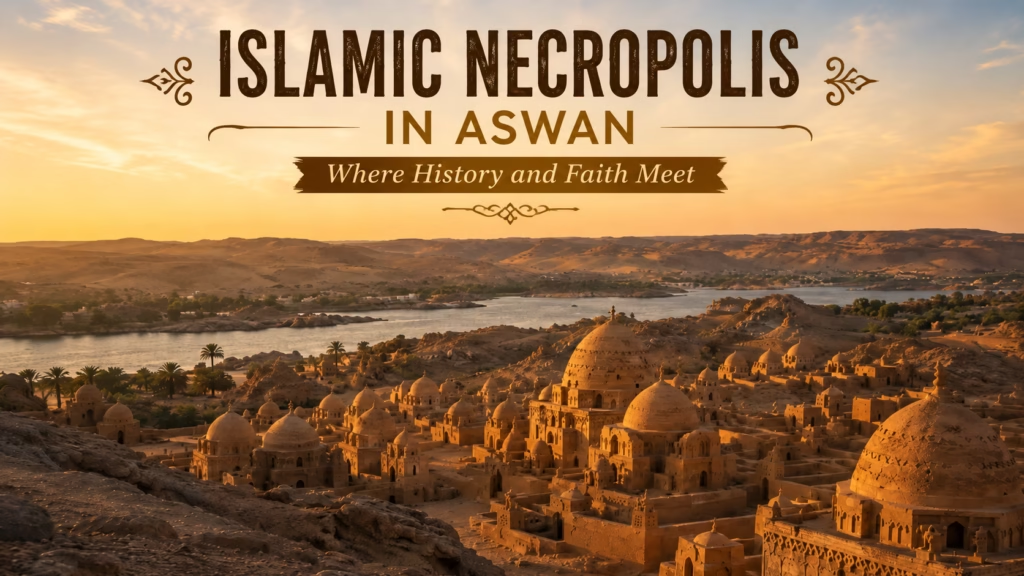
Many travel and historical sources use the names Fatimid Cemetery, Aswan Cemetery, Islamic Cemetery of Aswan, and Islamic Necropolis of Aswan for the same wider cemetery landscape or related parts of it.
When did the Fatimid dynasty rule Egypt?
The Fatimid dynasty ruled Egypt from 969 AD until 1171 AD. They founded Cairo as their capital and turned Egypt into a major center of Islamic politics, trade, and culture.
Why does the Fatimid Cemetery in Aswan matter?
The Fatimid Cemetery matters because it ranks among the oldest Islamic cemetery areas in Egypt and includes early examples of domed mausoleum architecture. It also shows an important Islamic layer of Aswan’s history.
Can tourists visit the Fatimid Cemetery in Aswan?
Yes, tourists can visit the cemetery area. A knowledgeable local guide can make the visit more useful. Visitors should dress modestly, walk carefully, and respect the cemetery as a sacred place.
Is the Aga Khan Mausoleum a Fatimid monument?
No. The Aga Khan Mausoleum does not date from the medieval Fatimid period. It stands as a modern 20th-century monument with an Ismaili connection and Fatimid-inspired architectural meaning.
Should I add the Fatimid Cemetery to my Aswan itinerary?
Yes, you should add it if you enjoy history, architecture, culture, and hidden places. It works well if you have extra time in Aswan or want to explore more than the standard temple route.
“Not sure which cruise to choose? Tell us your dates and budget.”