Deir el Medina is one of the most fascinating historical sites on the West Bank of Luxor. While many travelers focus on the Valley of the Kings, Hatshepsut Temple, and the Colossi of Memnon, this ancient village tells a different story. It shows the daily life of the skilled workers, artists, scribes, and craftsmen who helped build and decorate the royal tombs of ancient Thebes.
For travelers taking a Luxor to Aswan Nile cruise, Deir el Medina can be a meaningful addition to a Luxor West Bank tour. It is smaller and quieter than the major royal sites, but it gives you something very special: a human view of ancient Egypt. Here, you do not only see the world of kings and queens. You also step closer to the families, workers, and artists who made royal history possible.
This guide explains what Deir el Medina is, why it matters, what to see there, how long you need, and how to include it in your Nile cruise itinerary.
“Not sure which cruise to choose? Tell us your dates and budget.”
What Is Deir el Medina?
Deir el Medina was an ancient Egyptian workers’ village located on the West Bank of Luxor, near the Valley of the Kings and the Valley of the Queens. The village was home to the royal craftsmen who worked on the tombs of the New Kingdom pharaohs. These workers were not ordinary laborers. Many of them were highly skilled artists, stonecutters, painters, draftsmen, scribes, and builders.
The ancient name of the village was connected with the “Place of Truth,” because the people who lived there worked on sacred royal tombs. These tombs were designed to protect the pharaohs in the afterlife, so the work required precision, secrecy, religious knowledge, and exceptional artistic skill.
Today, Deir el Medina is valuable because it gives visitors rare insight into normal life in ancient Egypt. Unlike temples built for gods or tombs built for kings, this village shows homes, streets, private tombs, religious beliefs, work records, family life, and community organization.
Why Deir el Medina Is Important
Deir el Medina is important because it helps visitors understand ancient Egypt beyond royal monuments. Most famous sites in Luxor focus on pharaohs, gods, temples, and royal burials. However, this village reveals the people behind those achievements.
The workers who lived here helped create some of the most remarkable tombs in the Valley of the Kings. They prepared walls, carved chambers, painted religious scenes, and copied sacred texts. Because many written records were found in and around the village, historians have learned about wages, family disputes, religious festivals, work schedules, legal matters, and even personal letters.
As a result, Deir el Medina is one of the best places in Egypt to understand how skilled ancient workers lived. In addition, it helps answer a question many travelers have during a Luxor visit: who actually built and decorated the royal tombs?
Where Is Deir el Medina Located?
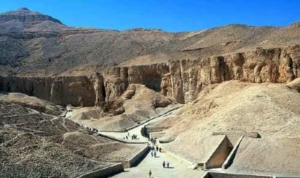
Deir el Medina is located on the West Bank of Luxor, close to some of the most famous archaeological sites in Egypt. It sits near the Valley of the Queens and not far from the Valley of the Kings. Because of this location, it can be added to a West Bank sightseeing day with other major sites.
Many standard Luxor West Bank tours include the Valley of the Kings, the Hatshepsut Temple, and the Colossi of Memnon. However, travelers who want a deeper experience can ask to include Deir el Medina as an extra stop. This works especially well for visitors who enjoy archaeology, ancient art, local stories, and quieter historical sites.
If you are following a 5 day Nile cruise itinerary, your Luxor sightseeing day is usually the best time to add Deir el Medina. Since most cruises already include West Bank visits, this site can fit naturally into the same travel route when timing allows.
What to See at Deir el Medina
Although Deir el Medina is not as large as Karnak Temple or the Valley of the Kings, it has several important things to see. The site is compact, but it rewards visitors who take time to look carefully.
The Ancient Workers’ Village
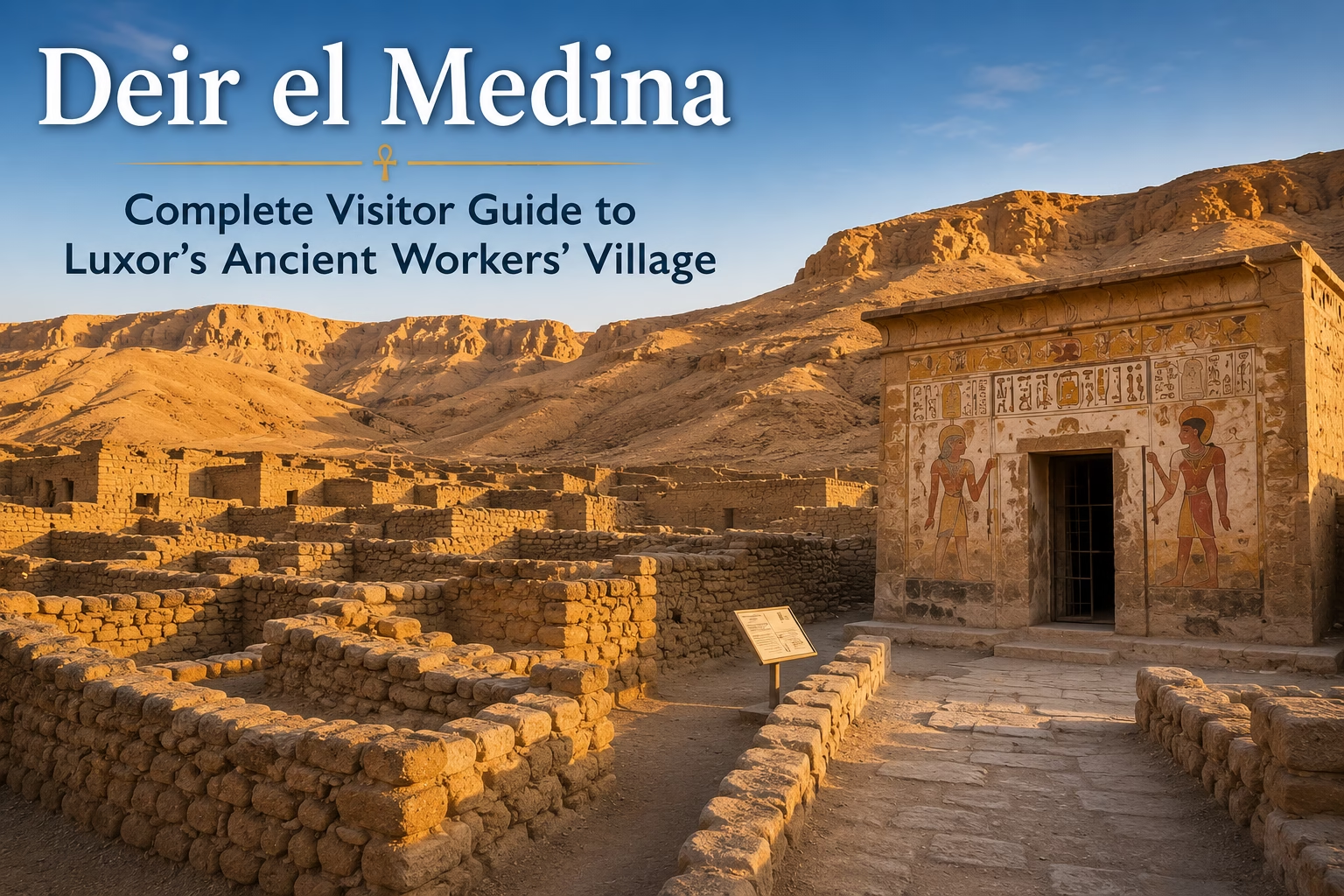
The village ruins are the heart of Deir el Medina. You can still see the layout of the settlement, including the remains of houses and narrow lanes. These homes were made for the families of the royal tomb workers. While the structures are simple compared with royal temples, they help you imagine the everyday life of ancient craftsmen.
Walking through the village gives you a clear contrast. On one side, Luxor is famous for grand temples and royal tombs. On the other hand, Deir el Medina shows the domestic side of the same civilization. This makes the site feel more personal and relatable.
The Tombs of the Workers
One of the best reasons to visit Deir el Medina is to see the decorated tombs of the workers themselves. These tombs are smaller than royal tombs, but many are beautifully painted. Since the people buried here were skilled artists, their own tombs often show excellent craftsmanship and strong religious imagery.
The colors, scenes, and details can be impressive. In some ways, these tombs feel more intimate than the royal tombs because they belonged to the people who lived and worked nearby. They show how workers viewed death, family, gods, and the afterlife.
The Ptolemaic Temple of Hathor
Another important feature at the site is the small temple dedicated to Hathor. This temple dates from a later period, after the original New Kingdom village was no longer active in the same way. Even so, it shows that the area remained spiritually meaningful for many centuries.
Hathor was connected with music, joy, motherhood, love, and protection. Therefore, the temple adds another layer to the experience. It helps visitors see how religious use of the site continued after the workers’ village had declined.
How Deir el Medina Connects to the Valley of the Kings
Deir el Medina is closely connected to the Valley of the Kings because many of its residents worked on the royal tombs there. When you visit the Valley of the Kings, you see the finished result: carved chambers, painted walls, sacred texts, and burial spaces for pharaohs. However, when you visit Deir el Medina, you see where many of the people responsible for that work lived.
This connection makes the site especially valuable. It turns a Luxor West Bank tour into a fuller story. First, you can visit the royal tombs and admire their beauty. Then, you can visit Deir el Medina and understand more about the workers who helped create them.
For this reason, Deir el Medina is a smart addition for travelers who want more than a quick photo stop. It gives context to the Valley of the Kings and makes the overall Luxor experience deeper.
Is Deir el Medina Worth Visiting?
Yes, Deir el Medina is worth visiting if you enjoy ancient Egyptian history, archaeology, tomb art, or quieter cultural sites. It may not be the first stop for every traveler, but it is one of the most rewarding places for those who want a more complete understanding of Luxor.
It is especially worth visiting if this is not your first time in Luxor or if you want to avoid only seeing the most crowded sites. The village gives you a different kind of experience. Instead of focusing only on power and royalty, it shows skill, labor, family, belief, and community.
However, if you have very limited time on a first visit, you may need to prioritize the Valley of the Kings, Karnak Temple, Luxor Temple, and Hatshepsut Temple first. After that, Deir el Medina is one of the best extra sites to add.
How Long Do You Need at Deir el Medina?
Most visitors need around 45 minutes to 1.5 hours at Deir el Medina. The exact time depends on your interest level and whether you enter the decorated tombs. If you only want a quick look at the village ruins and temple, a shorter visit may be enough. However, if you enjoy tomb art and historical explanation, allow more time.
A guide can make the visit much more meaningful. Without explanation, the village ruins may look simple at first. But with the right context, the site becomes a detailed story of ancient Egyptian working life.
Best Time to Visit Deir el Medina
The best time to visit Deir el Medina is usually early morning or later in the afternoon, especially during warmer months. Luxor can become very hot during the middle of the day, and the West Bank has strong sun exposure. Therefore, comfortable timing makes a big difference.
From October to April, sightseeing is generally more comfortable because temperatures are milder. During summer, visits are still possible, but it is better to start early, wear light clothing, bring water, and use sun protection.
If you are booking a Nile cruise, check how your Luxor sightseeing day is arranged. Some cruise programs have fixed tour times, while private arrangements may give you more flexibility.
Can You Visit Deir el Medina on a Nile Cruise?
Yes, you can visit Deir el Medina during a Nile cruise, especially if your cruise begins or ends in Luxor. Most Luxor to Aswan Nile cruise programs include a West Bank tour. Usually, this tour focuses on the Valley of the Kings, Hatshepsut Temple, and the Colossi of Memnon. Still, Deir el Medina can often be added if you request it in advance.
This is one reason private or flexible sightseeing can be useful. If you are interested in deeper history, ask your travel consultant whether Deir el Medina can be included. It may require a small adjustment to the schedule, but it can make your Luxor day much richer.
You can also compare cruise options through Best Nile Cruise Deals if you want a route that gives enough time for Luxor sightseeing. In addition, travelers looking for a premium experience can explore luxury Nile cruise options with guided excursions and more comfortable pacing.
Suggested Luxor West Bank Route With Deir el Medina
If you want to include Deir el Medina in your Luxor West Bank day, a practical route may look like this:
- Start early with the Valley of the Kings.
- Continue to Hatshepsut Temple at Deir el-Bahari.
- Visit the Colossi of Memnon for a short photo stop.
- Add Deir el Medina for the workers’ village and decorated tombs.
- If time allows, continue to Medinet Habu or the Valley of the Queens.
This route works well because the sites are all on the West Bank. However, timing depends on ticket choices, guide arrangements, cruise schedule, and the heat. Therefore, it is better to plan this with your tour operator before arrival.
Travel Tips Before You Visit
- Wear comfortable walking shoes because the ground can be uneven.
- Bring water, especially if visiting during warm months.
- Use a hat, sunglasses, and sunscreen for sun protection.
- Ask your guide to explain the daily life of the workers, not only the tomb art.
- Check which tombs are open before your visit, as access can change.
- Carry some cash for tickets or small local expenses.
- Visit early if you want a quieter and more comfortable experience.
Who Should Add Deir el Medina to Their Itinerary?
Deir el Medina is ideal for travelers who want to understand ancient Egypt in a more personal way. It is a strong choice for history lovers, repeat visitors to Luxor, photographers, culture-focused travelers, and anyone interested in the people behind the royal monuments.
It is also a good stop for travelers who enjoyed the Valley of the Kings and want to understand how those tombs were created. Since the site is close to other West Bank attractions, it does not usually require a completely separate day.
Nearby Sites to Combine With Deir el Medina
Deir el Medina can be combined with several important Luxor attractions. The most common nearby sites include the Valley of the Kings, Hatshepsut Temple, the Colossi of Memnon, the Valley of the Queens, and Medinet Habu. If your Nile cruise itinerary includes more time in Luxor, you can also visit Karnak Temple and Luxor Temple on the East Bank.
For a broader planning guide, you may also read Top 10 Must-See Sites on a Nile Cruise. This can help you understand how Deir el Medina fits into the larger route between Luxor, Edfu, Kom Ombo, and Aswan. If your cruise continues south, you may also enjoy reading about Kom Ombo Temple, another popular stop on many Nile cruise itineraries.
Recommended Nile Cruises for Luxor Sightseeing
Many Nile cruises include Luxor West Bank sightseeing as part of their itinerary. If you want comfort, guided visits, and a smooth route between Luxor and Aswan, you can compare ships before choosing your package.
For example, the MS Mayfair Nile Cruise is a popular choice for travelers who want a comfortable Nile cruise experience with classic sightseeing. The Farah Nile Cruise is another strong option for travelers looking for a luxury-style cruise between Luxor and Aswan. However, the best choice depends on your travel dates, budget, cabin preference, and route direction.
If Deir el Medina is important to you, ask before booking whether it can be added to the West Bank tour. Not every group itinerary includes it by default, so advance planning is the best way to avoid disappointment.
Final Thoughts on Visiting Deir el Medina
Deir el Medina is not only another ancient site in Luxor. It is a rare window into the lives of the people who helped create Egypt’s royal tombs. The village ruins, decorated workers’ tombs, and Hathor temple all tell a story of skill, faith, family, and daily life.
For many travelers, this site becomes one of the most memorable parts of Luxor because it feels more human than the grand royal monuments. While the Valley of the Kings shows the power of the pharaohs, Deir el Medina shows the talent and discipline of the workers behind that power.
If you are planning a Nile cruise through Luxor, consider adding Deir el Medina to your West Bank visit. It can turn a standard sightseeing day into a deeper journey through ancient Egyptian life.
FAQs About Deir el Medina
Deir el Medina is famous as the ancient workers’ village where many craftsmen, artists, and builders who worked on the royal tombs of Luxor lived with their families.
Yes, Deir el Medina is located on the West Bank of Luxor, close to the Valley of the Kings and the Valley of the Queens. This makes it easy to combine with other West Bank attractions.
Most visitors need around 45 minutes to 1.5 hours. If you want to explore the tombs carefully and listen to a full explanation from a guide, allow more time.
Yes, you can visit Deir el Medina during a Nile cruise if your itinerary includes Luxor. However, it is not always included in standard group tours, so it is better to request it before booking or before your Luxor sightseeing day.
Yes, but it is best for first-time visitors who already plan to see the main West Bank sites. If your time is limited, visit the Valley of the Kings and Hatshepsut Temple first, then add Deir el Medina if your schedule allows.
A guide is highly recommended. The ruins may look simple without context, but a knowledgeable guide can explain the workers’ lives, the tomb art, the village layout, and the site’s connection to the Valley of the Kings.
Plan Your Luxor and Nile Cruise Visit
Want to include Deir el Medina in your Luxor sightseeing plan? Egypt Nile Cruise Hub can help you compare cruise routes, ship categories, sightseeing options, and private tour upgrades. Tell us your travel dates, route preference, and budget, and we will help you choose the right Nile cruise experience.
Contact Egypt Nile Cruise Hub to start planning your Luxor and Nile cruise itinerary.
More on Luxor’s West Bank
- Tombs of the Nobles
- The Ramesseum
- Medinet Habu
- Valley of the Queens
- Mummification Museum in Luxor
- Luxor Museum
This site is part of our complete guide to every temple and historical site on a Nile cruise.
“Not sure which cruise to choose? Tell us your dates and budget.”
Not sure which Nile cruise is right for you?
Answer a few quick questions and we will match you with the best ships for your trip.