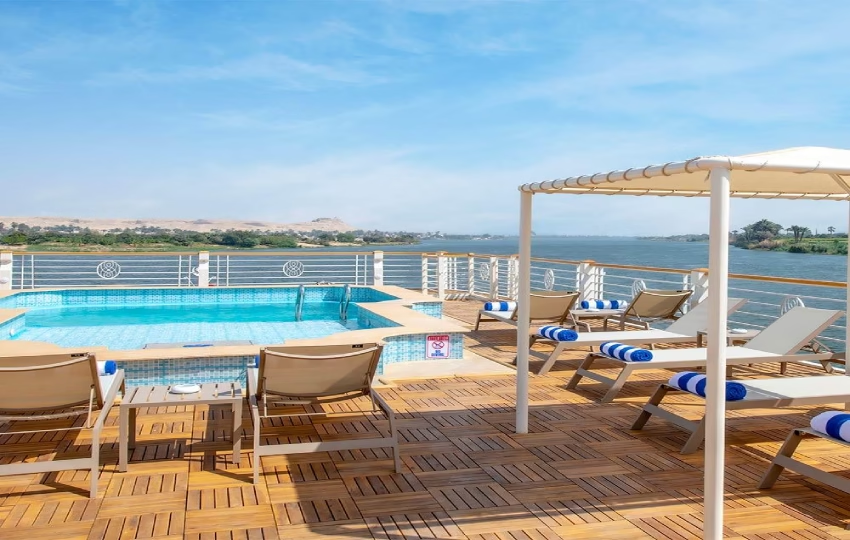
A Nile cruise might look at first glance like a trip built for history buffs and honeymooners, but it can also make a genuinely excellent family holiday. The combination of a stable, kid-friendly base on the ship, real-life pyramids and temples to bring history to life, and a slower daily pace than a typical multi-city tour all work in a family’s favor. This guide covers what to think about when planning a Nile cruise with children.
“Planning a family trip? Tell us your children’s ages and we will help you plan.”
Why a Nile Cruise Works Well for Families
Unlike a land tour that involves packing and unpacking at a new hotel every night or two, a Nile cruise means unpacking once and letting the scenery change around you instead. This matters more with children than almost any other consideration, since it removes a huge source of daily friction from the trip. The ship itself also offers built-in downtime: a pool deck to unwind at after a morning of temple visits, air-conditioned common areas, and set mealtimes that make the day feel structured and predictable, something children generally respond well to when traveling somewhere unfamiliar.
Choosing the Right Itinerary Length
Shorter itineraries, in the three to four night range, tend to suit families better than the longer seven-night classics, since they pack in the highlights without pushing young children through daily early starts for a full week. Temple visits generally happen in the morning to avoid the midday heat, which does mean earlier wake-up calls than a typical beach holiday, so it is worth setting that expectation with children in advance rather than as a surprise on day one.
Making Temple Visits Engaging for Kids
Ancient Egypt is, fortunately, one of history’s most naturally kid-friendly subjects: hieroglyphs to decode, tombs full of animal-headed gods, and pyramids that genuinely impress at any age. Many guides are skilled at tailoring their commentary for younger visitors, pointing out details like the animal gods, curse legends, and hidden chambers that adults might walk past. Bringing a simple hieroglyph alphabet card or a kid-oriented ancient Egypt book along for the trip, and turning tomb visits into a mini scavenger hunt for specific gods or symbols, tends to keep children genuinely engaged rather than counting down the minutes until lunch.
Practical Considerations
- Heat and sun protection matter even more for children, so pack a wide-brimmed hat, high-SPF sunscreen, and insist on regular water breaks during excursions
- Cabin configuration varies by ship, so confirm whether family cabins, connecting rooms, or extra beds are available before booking, since not every ship accommodates larger families easily
- Meal flexibility is generally good, since the buffet format onboard most ships means picky eaters can usually find something familiar alongside the Egyptian dishes
- Walking and stairs are a bigger factor than many parents expect, since temple sites involve uneven ground, sun exposure, and in some cases steep or narrow tomb stairways, so a stroller is impractical for most excursions beyond toddler age
- Pool safety onboard should be checked directly with your specific ship, as pool sizes, depths, and supervision policies vary
Choosing an Age-Appropriate Cruise
Families with very young children, generally under about five, may find a shorter cruise or a Cairo-based trip with day excursions works better than a full multi-day cruise, simply because the daily excursion pace is demanding for toddlers. Families with school-age children and teenagers tend to get the most out of a standard four to seven night cruise, where the history genuinely lands and the ship’s downtime balances the busier excursion mornings. If you are planning a family trip, our first-time Nile cruise guide and 4 day Luxor to Aswan itinerary are useful starting points for comparing options.
What a Cruise Day Looks Like With Children
Knowing the shape of the day in advance helps enormously, because it lets you prepare children for what is coming rather than negotiating each morning.
Most days start early, often with breakfast between six and seven and departure shortly after. This is not the operator being unreasonable; it is the only way to visit open air temple sites before the heat becomes genuinely difficult. Excursions typically run three to four hours, returning to the ship for lunch.
Afternoons are usually free, either sailing or moored, which is where the cruise format earns its place for families. Children can swim, read, or do nothing at all in an air conditioned cabin while the scenery changes outside. Evenings are relaxed, with dinner and sometimes light entertainment.
The rhythm is demanding in the morning and gentle in the afternoon, which suits children far better than a land tour where the whole day is spent moving between sites and hotels.
Preparing Children Before You Travel
The difference between a child who is engaged at Karnak and one who is bored is usually preparation rather than temperament.
Ancient Egypt is unusually well served by children’s books, documentaries and even video games, and a few weeks of casual exposure before the trip pays off enormously. A child who already knows who Anubis is, what mummification involved, or the story of Tutankhamun’s tomb arrives with questions rather than indifference.
Practical preparation matters too. Explain the early starts and why they happen. Explain that some tombs are small, dark and warm. Explain that people may want to sell them things and that it is fine to say no politely. Surprises are what unsettle children, not difficulty.
Keeping Children Engaged at Temples
Adults are often content to listen to a guide for forty minutes. Children generally are not, and the trick is giving them something to do rather than only something to hear.
- A hieroglyph card. A simple alphabet chart turns wall carvings into a puzzle. Finding their own name spelled in cartouches keeps children occupied for a surprisingly long time
- A god hunt. Ask them to spot Horus the falcon, Anubis the jackal, Sobek the crocodile and Thoth the ibis across a site. Most temples contain all of them
- A camera or sketchbook. Giving a child responsibility for photographing the trip changes how closely they look at things
- A question for the guide. Encouraging one question per site makes them listen for something to ask about
- A tally. Counting columns at Karnak’s hypostyle hall, or cats, or boats on the river, works well for younger children
Tell your guide on the first morning that you have children and roughly what ages. Experienced Egyptologist guides adjust their delivery considerably when asked, leaning into the stories, the curses, the animal gods and the treasure, and leaving the architectural chronology for the adults.
Which Sites Land Best With Children
Not every site holds a child’s attention equally, and knowing which to prioritise helps.
Karnak is usually the winner. The scale of the hypostyle hall genuinely impresses at any age, and there is room to walk around rather than queue.
The Valley of the Kings works because tombs feel like exploration, though the heat and the queues can wear younger children down. Two or three tombs is usually the right number.
Kom Ombo has a crocodile museum with actual mummified crocodiles, which is reliably a highlight.
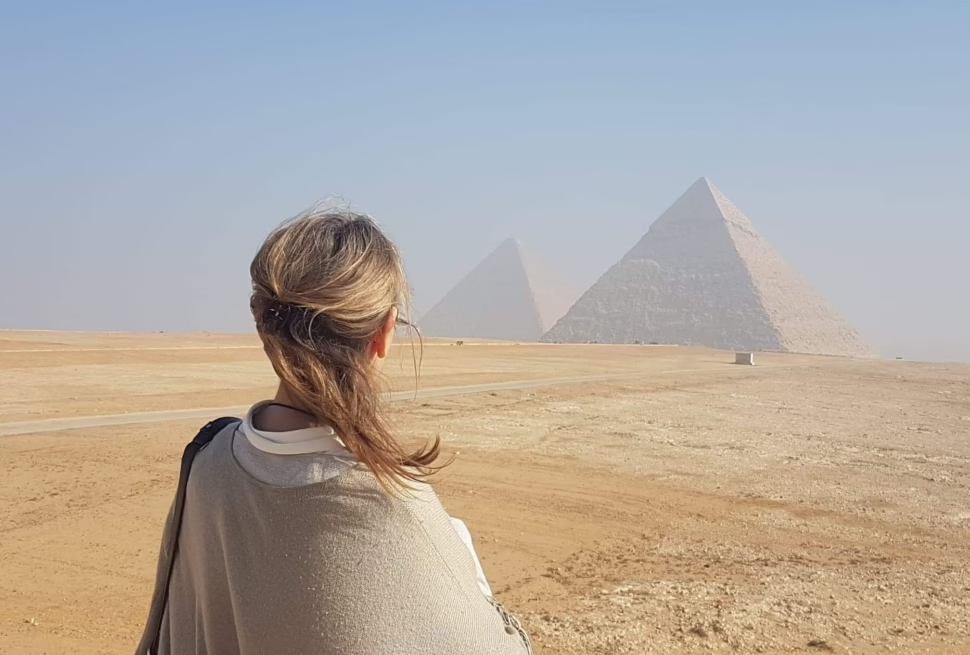
The Giza pyramids and Sphinx need no explanation, and the camel rides outside are often remembered longer than the monuments.
Philae benefits from arriving by boat, which children enjoy independently of the temple itself.
The Egyptian Museum can be harder work, as it is dense and traditional in presentation. Focusing on the Tutankhamun material and the animal mummies rather than attempting comprehensive coverage works better.
Health and Safety With Children
Children dehydrate faster than adults and show heat stress later and less obviously, which is the main practical risk on this trip.
Insist on regular water breaks rather than waiting for a child to say they are thirsty. A wide brimmed hat is more effective than a cap because it shades the neck and ears. Apply sunscreen before leaving the ship rather than at the site, and reapply after two hours. Long sleeved lightweight clothing protects better than sunscreen alone.
Bring rehydration sachets, any regular medication in sufficient quantity, and a small first aid kit. Pharmacies in Luxor and Aswan are well stocked, but brand names differ and explaining a specific requirement across a language barrier while a child is unwell is not the moment you want to be doing it.
On the ship, establish pool rules on day one. Supervision arrangements vary between vessels and you should not assume a lifeguard is present. Check the pool depth and the deck layout with your children before they use it independently.
Cabins, Costs and Booking Considerations
Cabin arrangements are the detail most worth resolving before booking rather than after. Nile cruise cabins are generally designed for two, and options for families vary considerably by ship.
Some vessels offer connecting cabins, some allow a third bed for a child, and some simply require two separate cabins. On smaller ships and Dahabiyas, family configurations may be very limited. Give your operator the ages and number of children at enquiry stage so they can filter to ships that genuinely work rather than ones that technically have availability.
Child rates are standard and vary by age band, with infants usually charged very little and older children moving toward adult pricing. Because pricing depends on cabin occupancy as well as age, a family of four may find that two cabins with two adults and two children costs differently than expected, so ask for the specific breakdown rather than assuming.
Is Your Child the Right Age?
Under five: manageable but demanding. The early starts, heat and walking are a lot for small children, and much of the history will pass them by. A shorter cruise, or a Cairo based trip with selective day excursions, often works better.
Six to eleven: arguably the sweet spot. Old enough to walk the sites and follow the stories, young enough to find mummies and tombs genuinely thrilling. This age group tends to get the most from the trip.
Twelve and up: teenagers usually engage well, particularly if they have studied ancient Egypt at school. Downtime on deck and reliable connectivity matter more to this group, so ask about onboard WiFi if that is likely to be an issue.
A Nile cruise is one of the more genuinely family friendly ways to see a country that can otherwise be demanding to travel in. The single base, the structured days, the built in afternoon downtime and the sheer visual drama of the sites combine into something most children remember for a very long time.
“Not sure which cruise to choose? Tell us your dates and budget.”
Not sure which Nile cruise is right for you?
Answer a few quick questions and we will match you with the best ships for your trip.