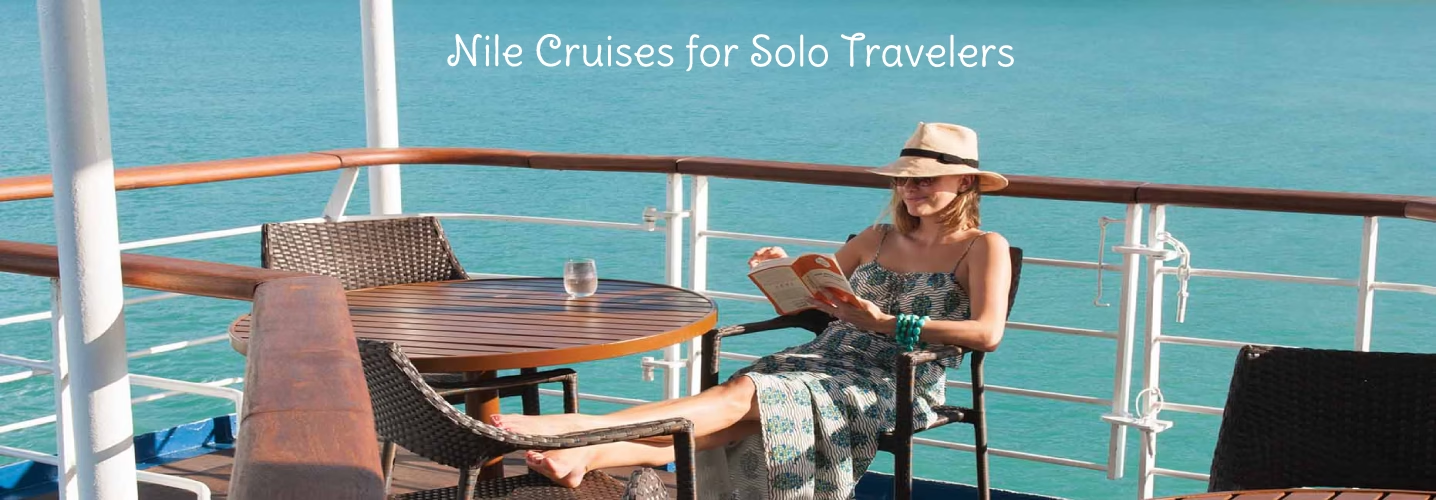
Egypt sees a steady stream of solo travelers and solo women specifically. And a Nile cruise is one of the more approachable ways to experience the country independently. Since the structure of guided excursions and a fixed onboard community naturally builds in company. And safety without requiring you to arrange every detail yourself. This guide covers what solo and female travelers should know when planning a Nile cruise.
“Traveling solo? Ask us about single supplement options and group departures.”
Why a Cruise Suits Solo Travel Well
Independently organizing transport, guides, and entry logistics at every single site in Egypt is genuinely more complex than in many other destinations, and a Nile cruise removes nearly all of that friction. Excursions are guided and scheduled, transport between sites is arranged, and meals are included, meaning a solo traveler is never navigating an unfamiliar city alone after dark to find dinner. The onboard environment also naturally creates social opportunities, with shared meals and lounges putting you in regular contact with other travelers, which many solo travelers cite as one of the unexpected highlights rather than a drawback of choosing a cruise over independent travel.
Understanding the Single Supplement
Most Nile cruise pricing is built around double occupancy, so traveling alone usually means paying a single supplement to cover the cabin at a solo rate. This is standard across the cruise industry generally, not specific to Egypt, but it is worth budgeting for from the outset rather than being caught off guard when comparing advertised per-person prices, which are almost always based on two people sharing. Some cruise operators occasionally waive or reduce the single supplement during lower-demand periods, so it is worth asking directly rather than assuming the listed solo rate is fixed.
Practical Safety Considerations for Women Traveling Alone
Egypt is a generally conservative society, and dressing modestly, particularly at religious and cultural sites, is both respectful and practical: covering shoulders and knees is a sensible default for temple visits, regardless of gender. Solo women commonly report that persistent attention from vendors and touts, rather than physical safety, is the most common daily friction point, and a firm, polite decline combined with continuing to walk generally resolves this quickly. Staying within your guided group during excursions, avoiding walking alone after dark in unfamiliar areas of a city, and trusting your instincts if a situation feels off are the same sensible defaults that apply to solo travel anywhere in the world, not something specific to Egypt.
Choosing the Right Cruise Style for Solo Travel
Standard and deluxe Nile cruises, which tend to carry larger groups, generally offer the most natural social atmosphere for solo travelers, since there are simply more people around at meals and on excursions to strike up conversation with. Smaller ships and Dahabiyas, which carry far fewer passengers, offer a quieter, more intimate experience that some solo travelers prefer specifically for the calmer pace, though the socializing opportunity is naturally smaller with fewer fellow guests aboard. Neither is objectively better for solo travel, and the right choice comes down to whether you are looking for company or quiet.
Staying in Touch and Staying Prepared
Sharing your itinerary and cruise operator’s contact details with someone at home, keeping a photo of your passport and visa stored separately from the originals. And having a local SIM card for reliable connectivity are all sensible basics for any solo trip. For more on staying connected, see our guide to WiFi and SIM cards on a Nile cruise. And for the wider question of whether a cruise suits your travel style, our guide on whether a Nile cruise is worth it is a useful companion read.
Follow us on Facebook, Instagram and Pinterest.
Understanding the Single Supplement
The single supplement is the most common frustration for solo travellers, and it helps to understand where it comes from rather than treating it as an arbitrary penalty.
Advertised cruise prices are almost always quoted per person based on two people sharing a cabin. The ship’s cost of operating that cabin is broadly the same whether one person or two occupies it, so a solo traveller pays a supplement to cover the difference. This is standard across the cruise industry worldwide rather than specific to Egypt.
The supplement varies considerably by ship, season and demand, and it is genuinely worth asking rather than assuming. Some operators reduce or waive it during quieter months when cabins would otherwise sail empty. Some ships have a small number of cabins designed for single occupancy which are priced differently. Some offer a cabin share scheme matching solo travellers of the same gender, removing the supplement entirely.
Travelling in May, September or October rather than at peak season is often the single most effective way to reduce it.
The Social Side of a Cruise
A concern many solo travellers raise before booking is whether they will feel conspicuous among couples and families. In practice, the structure of a cruise makes this one of the easier solo travel formats.
Meals are shared, excursions are group based, and you spend several days with the same set of people. Conversation happens naturally over a week in a way it does not on a two night hotel stay. Many solo travellers report ending the cruise with people they still keep in touch with.
Equally, the cabin is entirely yours and nobody minds if you take an afternoon alone with a book. The balance between company and solitude is easier to strike here than in most travel formats.
Ship size shapes this considerably. Larger standard and deluxe vessels carrying a hundred or more passengers offer more people to meet. Small ships and Dahabiyas carrying six to twelve guests create a much more intimate group, which is wonderful if the group gels and quieter if it does not.
Dressing Appropriately in Egypt
Egypt is a socially conservative country, and dressing modestly is both a matter of respect and a practical way to reduce unwanted attention. This applies to all travellers, though it is more often discussed in relation to women.
A reasonable default is covering shoulders and knees when off the ship. Loose, lightweight, long clothing is more comfortable in the heat than shorts and vest tops anyway, and offers better sun protection at exposed temple sites. A scarf is genuinely useful: for covering your head at mosques, your shoulders at temples, or your face during a dusty khamsin day.
On the ship itself, standards are relaxed. Swimwear on the pool deck is entirely normal and nobody expects modest dress aboard.
None of this is about blame or restriction. It is the same calibration any traveller makes when visiting a place with different social norms, and most women report that it makes moving around Egypt more comfortable rather than less.
Dealing With Attention and Persistent Vendors
The most frequent complaint from solo women in Egypt is not about safety but about persistence: vendors, would be guides, calèche drivers and occasionally men making comments. This is wearing rather than threatening, and there are effective ways to handle it.
A firm, clear no while continuing to walk works better than anything else. Engaging in conversation, even to explain why you are declining, signals that the interaction is open. Sunglasses help. Walking with purpose rather than pausing uncertainly helps more.
La’, shukran means no thank you and is worth learning, as declining in Arabic is often more effective than in English.
Staying with your guide and group at busy sites like Karnak or the Giza plateau substantially reduces the volume of approaches, since vendors focus on unaccompanied visitors. If someone becomes genuinely persistent or makes you uncomfortable, moving toward your guide or tourist police, who are present at all major sites, resolves it quickly.
It is worth saying plainly that most interactions in Egypt are warm and welcoming. Hospitality toward guests is a genuine cultural value, and many solo women describe conversations with shopkeepers, crew and fellow passengers as among the best parts of the trip.
Practical Safety Habits
The precautions that make sense in Egypt are largely the ones that make sense anywhere, applied consistently rather than anxiously.
- Share your itinerary, ship name and operator contact details with someone at home before you travel
- Keep a photo of your passport and visa stored separately from the originals
- Use the ship’s safe for your passport, spare cards and valuables
- Take licensed taxis or transport arranged by your ship or hotel rather than unmarked cars
- Avoid walking alone in unfamiliar areas after dark, particularly away from the main tourist streets
- Carry small notes so you are not visibly counting a large amount of cash in public
- Trust your instinct if a situation feels off, and remove yourself without worrying about being impolite
Save your ship’s reception number and your guide’s mobile number on your first day. If you become separated from the group at a large site, this is far more useful than trying to describe where you are.
Choosing the Right Ship as a Solo Traveller
Ship choice affects the solo experience more than most people anticipate, and it is worth thinking about what you actually want.
If you are hoping to meet people, a larger standard or deluxe vessel gives you the widest pool of fellow passengers and the most relaxed social atmosphere. Shared dining tables rather than assigned couples’ tables help considerably, so it is worth asking how the ship handles seating.
If you want quiet, a Dahabiya or small luxury vessel offers a calmer pace and a handful of fellow guests. The trade off is that if you do not click with the group, there is nowhere else to go.
Ask specifically about single cabin availability, current supplement rates, whether a cabin share scheme operates, and how dining is arranged. These four questions resolve most of the uncertainty before you commit.
Free Time Between Excursions
Solo travellers often have more appetite for independent exploring than a guided programme allows. This is entirely possible in Luxor and Aswan, both of which are manageable towns with walkable central areas.
Luxor’s corniche, the souk, and Luxor Museum are all reachable on foot from most moorings. In Aswan, the corniche and the Nubian market are similarly accessible. Ask your guide what is walkable from where the ship is moored and roughly how long you have, and tell reception when you expect to be back.
Travelling alone in Egypt is common, and a Nile cruise removes most of the logistical friction that makes independent travel here demanding. The transport, guiding, meals and site entry are handled, which leaves you free to engage with the country rather than managing it. For a great many solo travellers, it is the trip that convinces them long haul solo travel is entirely within reach.
“Not sure which cruise to choose? Tell us your dates and budget.”
Not sure which Nile cruise is right for you?
Answer a few quick questions and we will match you with the best ships for your trip.