Egypt’s entry rules are one of the first things every Nile cruise traveler asks about, and the good news is that for most nationalities the process is simple. This guide walks through the visa options available in 2026, what documents you actually need, and the practical details that trip up first-time visitors.
“Planning your first trip to Egypt? Tell us your dates and we will help you plan the details.”
Do You Need a Visa to Visit Egypt?
Most travelers do need a visa to enter Egypt, but for the majority of nationalities this is a straightforward process that can be completed either before departure or on arrival. Egypt offers three main routes: a visa on arrival at the airport, an electronic e-visa applied for online in advance, and a small number of nationalities who can enter visa-free for short stays. Citizens of most European countries, the United States, Canada, Australia, and many other nations are eligible for the visa on arrival or e-visa options.
Because visa policies and fees change periodically, always confirm the current requirements for your specific nationality on Egypt’s official visa portal or with your nearest Egyptian consulate before booking flights.
Visa on Arrival
The visa on arrival is the option most travelers still use, and it is available at Cairo, Luxor, Hurghada, Sharm El Sheikh, and most other international airports in Egypt. After landing, look for the visa purchase counters before passport control, usually marked clearly with bank logos. You pay the fee in US dollars, euros, or another major currency, receive a visa stamp or sticker, and proceed to passport control. The whole process typically takes a few minutes, though queues can build up during peak arrival times, so having exact change ready speeds things along considerably.
A standard tourist visa on arrival is generally valid for a single entry of up to 30 days, which comfortably covers even the longer Nile cruise itineraries combined with time in Cairo or the Red Sea.
The Egypt e-Visa
The e-visa is applied for entirely online through Egypt’s official e-visa portal before you travel. You upload a scan of your passport photo page, answer a short questionnaire, pay by credit card, and receive your visa by email, usually within a few business days. This is worth considering if you would rather have everything finalized before you fly, if you are traveling with a large family and want to avoid queues, or if your airline requires proof of visa status before boarding.
Only use the official government e-visa site when applying. A number of third-party websites mimic the official portal and charge significantly inflated service fees for the same visa, so double-check the web address before entering any payment details.
What Documents You Will Need
- A passport valid for at least six months beyond your arrival date, with at least one blank visa page
- Proof of onward or return travel, occasionally requested at passport control
- Your visa on arrival fee in cash, or your printed or emailed e-visa confirmation
- Your cruise booking confirmation or hotel details, which some officers ask to see
Traveling With Children
Children need their own passport and, in most cases, their own visa. Check current rules for minors traveling with only one parent, as some situations call for additional documentation such as a notarized consent letter from the non-traveling parent.
Common Mistakes to Avoid
The most frequent hiccup is a passport with insufficient validity remaining, which can result in denied boarding at your departure airport rather than a problem in Egypt itself, since airlines check this at check-in. The second most common issue is not having small denomination cash for the visa on arrival fee, as counters do not always have change for large bills. Finally, some travelers assume Egypt is visa-free for their nationality based on outdated information, so it is worth reconfirming close to your travel date rather than relying on what a friend told you about a trip a few years ago.
How This Fits Into Your Nile Cruise Planning
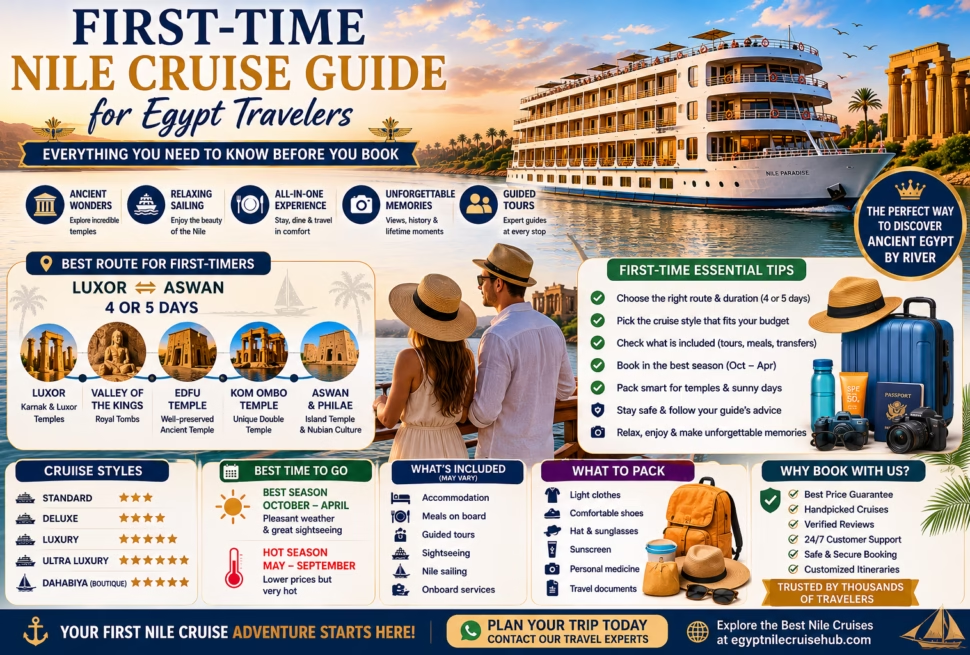
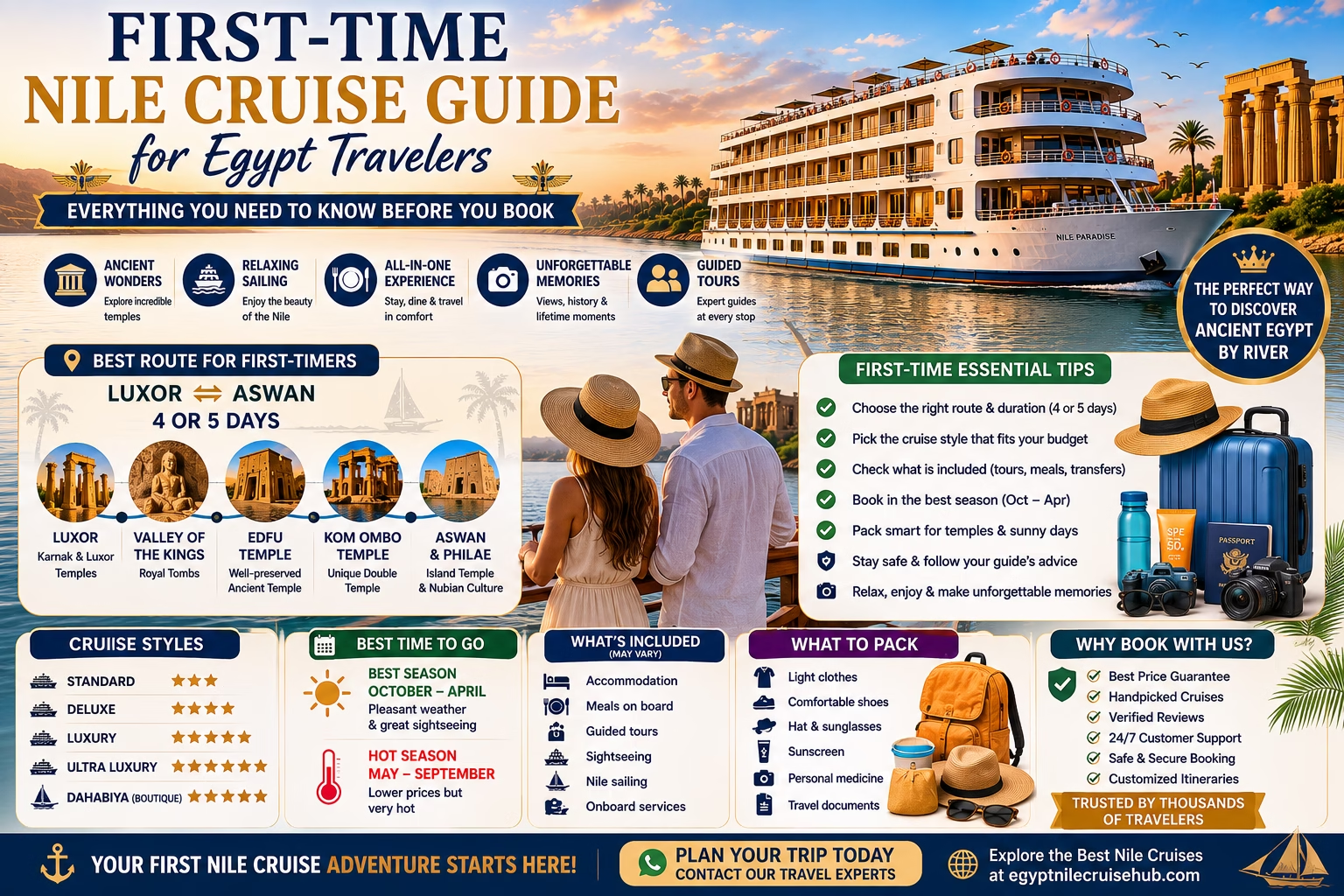
Once your visa is sorted, the rest of your Egypt trip planning becomes much simpler. Most Nile cruise itineraries begin in either Luxor or Aswan, reached by a short domestic flight or overnight train from Cairo, so your Egypt visa covers your entire trip regardless of how many cities you visit or which cruise ship you choose. If you are still deciding on an itinerary, our guide to the Luxor to Aswan cruise route and our overview of first-time Nile cruise planning are good next stops.
Follow us on Facebook, Instagram and Pinterest.
Passport Validity: The Rule That Catches People Out
The six month passport validity rule deserves more attention than it usually gets, because it causes more cancelled trips than any other documentation issue. The requirement is that your passport remains valid for at least six months beyond your date of arrival in Egypt, not beyond your date of departure from home. A passport expiring in four months will see you turned away at check-in by your airline before you ever reach an Egyptian immigration desk, and airlines apply this rule strictly because they carry the cost of returning improperly documented passengers.
Check your expiry date the moment you start planning rather than the week before you fly. Passport renewal times vary considerably by country and season, and a renewal that normally takes three weeks can stretch to two months during busy periods. If your Nile cruise is booked and paid for, a delayed passport is an expensive problem.
Choosing Between the e-Visa and Visa on Arrival
Both routes lead to the same outcome, so the decision comes down to your circumstances rather than one being objectively better.
The visa on arrival suits confident travellers arriving on daytime flights with time to spare. It costs the same or less than the e-visa, requires no advance planning, and the process at the airport is genuinely quick when queues are short. The risk is timing: if you land alongside three other wide-body aircraft, the visa counter queue and then the immigration queue can consume an hour or more, which matters if you have a connecting domestic flight to Luxor or Aswan the same day.
The e-visa suits families, groups, anyone arriving late at night, and travellers who simply prefer certainty. Applying two to four weeks ahead gives comfortable margin for processing. It also gives you documentation to show your airline if they query your entry eligibility at check-in, which occasionally happens with less experienced ground staff at smaller departure airports.
Arriving at Different Egyptian Airports
Most Nile cruise travellers arrive at Cairo International, which is Egypt’s largest airport and handles the majority of long haul arrivals. Visa counters sit before passport control in each terminal, clearly signed and operated by Egyptian banks. Once you have your visa sticker, you join the immigration queue as normal.
Luxor and Aswan airports handle far fewer international arrivals, mostly charter flights and regional connections. The visa process there is the same but the scale is smaller, which usually means shorter queues. If your itinerary begins directly in Upper Egypt rather than Cairo, confirm with your airline that your specific flight arrives at a terminal offering visa on arrival services, since arrangements at smaller airports occasionally change.
Hurghada and Sharm El Sheikh serve Red Sea resort traffic. Travellers combining a beach stay with a Nile cruise sometimes enter through one of these, and both handle visa on arrival routinely.
What Happens at Immigration
Egyptian immigration is generally straightforward and officers rarely ask extended questions of tourists. You hand over your passport with the visa sticker affixed, and you may be asked where you are staying and how long you intend to remain. Having your cruise confirmation or hotel booking accessible on your phone or printed makes this smoother, though it is not always requested.
Your passport is stamped with an entry date, and this stamp determines the length of your permitted stay. Check that the stamp is legible and that the date is correct before leaving the desk. Errors are rare but far easier to correct on the spot than later.
Overstaying and Extensions
A standard tourist visa permits a stay of up to 30 days, which comfortably covers any Nile cruise itinerary including extended trips combining Cairo, the cruise, Abu Simbel and a Red Sea stay. If you plan to remain longer, extensions can be applied for at passport offices within Egypt, though the process takes time and paperwork.
Overstaying without an extension results in a fine payable on departure, and while short overstays are usually resolved with a modest payment at the airport, they add stress to a departure day that is already busy. If your plans change while in Egypt, ask your cruise operator or hotel for guidance rather than assuming it will be overlooked.
Travel Insurance and Health Documentation
Egypt does not currently require proof of travel insurance for entry, but travelling without it on a trip involving domestic flights, river cruising and remote desert sites is a poor economy. Medical evacuation from Upper Egypt or Lake Nasser is expensive without cover, and cruise cancellation clauses are worth reading carefully given how far in advance most people book.
Vaccination requirements for Egypt are minimal for most travellers, though a yellow fever certificate is required if you are arriving from a country where yellow fever is endemic. Check current requirements with a travel clinic well ahead of departure, since some recommended vaccinations need several weeks to take effect.
Documents Worth Keeping Copies Of
Keep a photograph of your passport photo page, your visa, and your travel insurance policy stored somewhere accessible that is not your physical wallet, such as an email to yourself or a cloud folder. If your passport is lost or stolen, having a copy substantially speeds up the replacement process at your embassy in Cairo.
Your cruise ship will typically hold passengers’ passports briefly during the cruise for registration with river authorities, which is standard practice on the Nile and nothing to be concerned about. They are returned before disembarkation.
A Realistic Timeline for Getting Ready
- Three to six months out: check passport expiry and renew if within six months of your arrival date
- Two to three months out: book flights and cruise, arrange travel insurance
- Four to six weeks out: visit a travel clinic if vaccinations are recommended for you
- Two to four weeks out: apply for the e-visa if you have chosen that route
- One week out: print or save your visa, cruise confirmation and insurance details
- Day of travel: carry visa fee in small denomination cash if using visa on arrival
Egypt’s entry process is genuinely one of the more straightforward parts of planning a Nile cruise. The paperwork is light, the options are flexible, and the vast majority of travellers pass through without incident. The problems that do occur almost always trace back to passport validity or leaving the e-visa application until the last week, both of which are entirely avoidable with a little forward planning.
“Not sure which cruise to choose? Tell us your dates and budget.”
Not sure which Nile cruise is right for you?
Answer a few quick questions and we will match you with the best ships for your trip.