Nile cruise ships in Egypt are sold in four classes — standard, deluxe, luxury and ultra-luxury — plus the dahabiya, which sits outside the system entirely. The labels are set by operators rather than by any official body, so they are a rough guide, not a regulated grade. This page explains what each one actually means. If you have already narrowed things to the upper tiers, our deluxe vs luxury vs ultra-luxury comparison goes deeper.
The Four Classes at a Glance
| Class | Ships we work with | Typical ship size | Best for |
|---|---|---|---|
| Standard 5-star | 32 | 50–70 cabins | Travellers prioritising the temples over the ship |
| Deluxe 5-star | 23 | 50–65 cabins | The most common choice — solid comfort, sensible price |
| Luxury 5-star | 18 | 40–67 cabins | Better cabins, food and service on longer sailings |
| Ultra-luxury | 16 | 18–40 cabins | Small-ship travel and the heritage steamers |
| Dahabiya | 5 | 10–12 guests | Sailing boats, slow travel, quiet moorings |
Note the pattern in that table: as the class rises, the ship generally gets smaller, not bigger. That is the opposite of ocean cruising and it is the single most useful thing to understand about the Nile.
1. Standard 5-Star
Comfortable, clean and perfectly serviceable, with a pool, a restaurant and a sun deck. Cabins are compact, furnishings are dated on some vessels, and the buffet is simpler. Examples include the Admiral, Commodore and Grand Rose. On a three or four-night sailing where you are ashore most mornings, the difference from deluxe is smaller than the price gap suggests.
2. Deluxe 5-Star
The volume choice, and for most travellers the sensible one. Better cabins and bedding than standard, a wider dinner menu, and more reliable service, without the premium of the luxury tier. Ships in this class include Al Jamila, Alyssa and the Blue Shadow vessels.
3. Luxury 5-Star
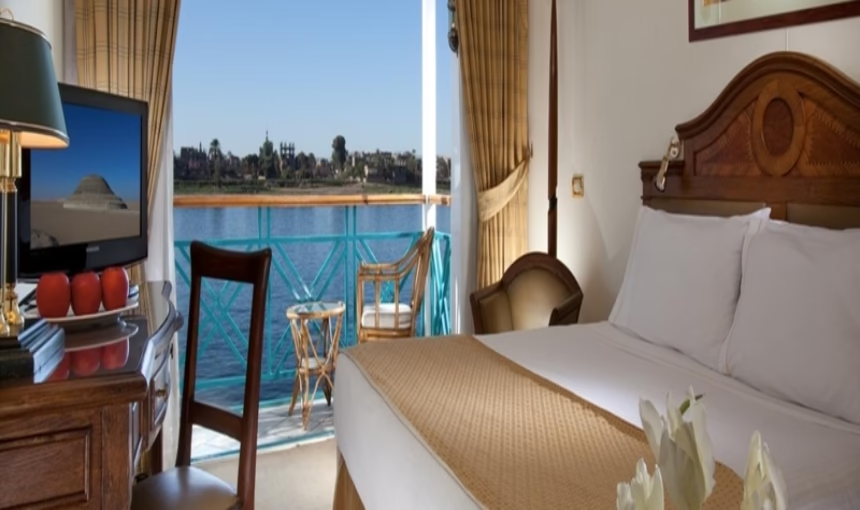
A real step up in cabin size, food quality and staffing levels. A standard double lands around 19 to 21 square metres and suites run 30 square metres and above. Ships include the Steigenberger Royale, Le Fayan Suites (all-suite) and the historic Movenpick SS Misr. Worth the upgrade mainly on sailings of four nights or more.
4. Ultra-Luxury
The smallest and most distinctive vessels on the river. The Steam Ship Sudan was built in 1885 for the Egyptian royal family and carries 23 rooms; the Oberoi Philae has 22 cabins for a maximum of 42 guests; the Sanctuary Sun Boat III just 18 staterooms. You are paying for space per guest and for service ratios, not for more facilities — some of these ships have no lift and only a plunge pool.
And the Dahabiya
A dahabiya is a twin-masted sailing boat carrying roughly 10 to 12 guests. It moors at villages and sandbanks the big ships cannot reach and moves at the pace of the wind, which means the itinerary is looser. There is no pool, no evening entertainment and no crowd. Our dahabiya vs luxury cruise comparison covers the trade-off properly.
Which Class Should You Book?
- Three or four nights, temples are the priority — standard or deluxe. You will be ashore most of the time.
- Five nights or more — luxury starts to earn its price, because you spend real hours on board.
- You want the ship to be the experience — ultra-luxury or a dahabiya.
- Travelling with reduced mobility — favour the larger luxury ships and confirm lift access; the heritage vessels often lack one.
Tell us your dates and budget and we’ll recommend a class and a ship.
Why the Ships Get Smaller as the Class Goes Up
On the Nile the premium tiers compete on space per guest rather than on facilities. Every ship sails the same river, stops at the same temples and is limited by the same lock at Esna, so there is no scope to differentiate with size the way ocean lines do. The only levers left are how many people share the vessel and how many staff look after them. That is why a 62-cabin ship is usually marketed below an 18-stateroom one.
It also explains a common booking mistake. Travellers upgrade expecting more on board — a bigger pool, more restaurants, a larger gym — and find the opposite. The upgrade buys quiet and service, not amenities.
What the Class Label Does Not Tell You
Four things matter as much as the tier, and none of them appear in the name:
- Refurbishment date. A deluxe ship refitted two years ago will feel newer than a luxury vessel that has not been touched in a decade.
- Guest numbers on your sailing. Ships rarely run full outside peak season, and a half-full deluxe boat feels very different from a sold-out one.
- Your guide. The Egyptologist shapes the trip more than the carpet does. This is set by the operator, not the ship.
- The route. A four-night Aswan–Luxor sailing sees fewer sites than five nights in the other direction, whatever class the ship is.
Common Questions
Is a 5-star Nile cruise the same as a 5-star hotel? No. Ship ratings are assigned by operators and are not tied to the hotel star system. Treat them as a price band.
Do all classes visit the same temples? Yes. The itinerary is set by the route, not the class. Karnak, the Valley of the Kings, Edfu, Kom Ombo and Philae appear on standard and ultra-luxury sailings alike.
Which class is best for families? Deluxe or luxury. Standard cabins are tight for four, and the ultra-luxury boutique ships are quiet, adult-leaning and often lack a usable pool.
Related Guides
Deluxe vs luxury vs ultra-luxury · The 15 best luxury ships · What a luxury cruise costs · What it is like on board · Compare every ship
“Not sure which cruise to choose? Tell us your dates and budget.”
Not sure which Nile cruise is right for you?
Answer a few quick questions and we will match you with the best ships for your trip.