While most Nile cruise itineraries rightly center on the great temples, Aswan holds a cluster of islands in the river itself that reward travelers who make time for them: Elephantine Island’s Nubian villages, Kitchener’s Island’s botanical gardens, and the smaller Sehel Island with its ancient rock inscriptions. This guide covers what makes each one worth a visit and how they typically fit into a cruise stop in Aswan.
“Want Nubian village visits added to your Aswan stop? Ask us when booking.”
Elephantine Island and Its Nubian Villages
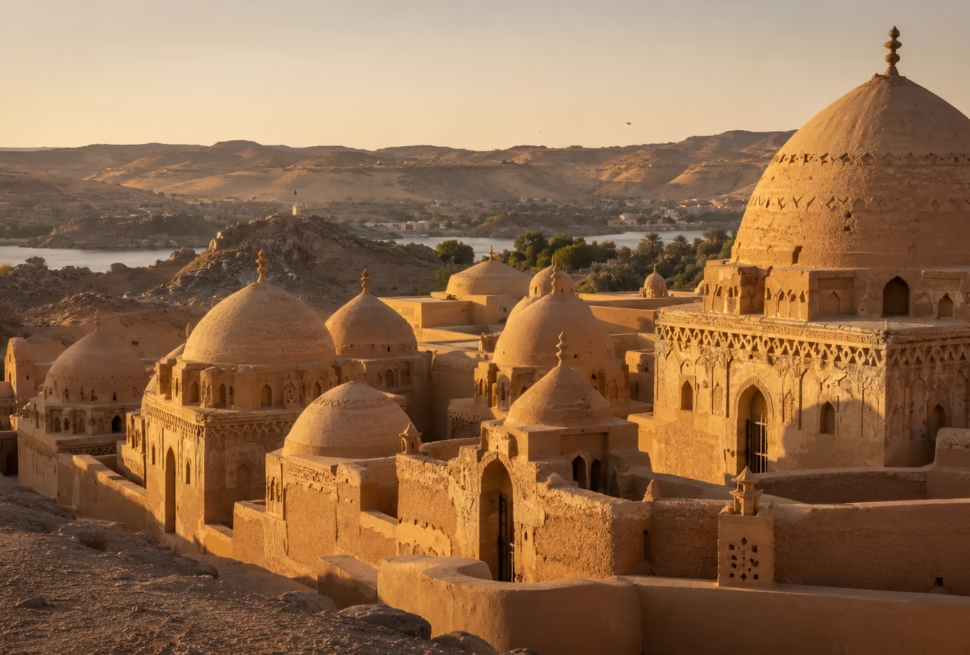
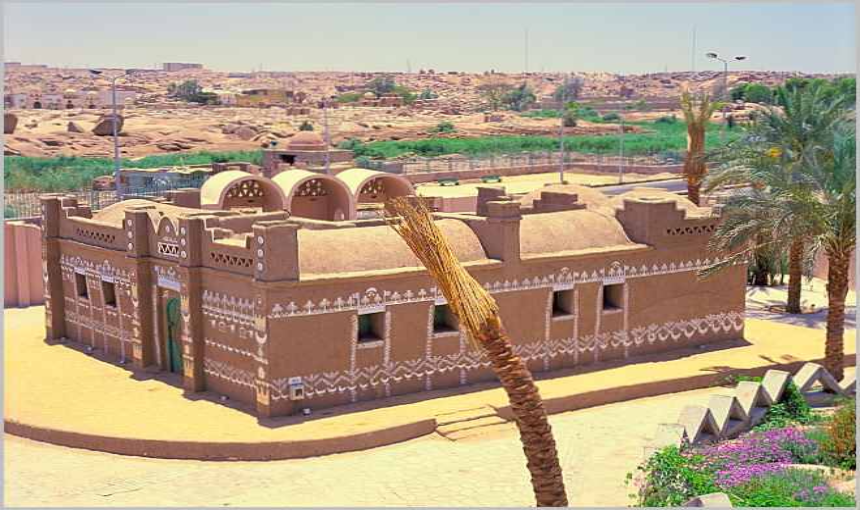
Elephantine Island sits directly across the river from central Aswan and takes its name, according to most historians, either from its shape when viewed from above or from the elephant ivory once traded here. The island is home to two colorful Nubian villages, Siou and Koti, known for houses painted in bright blues, yellows, and pinks and for a warm, distinctly Nubian hospitality that differs noticeably from the rest of Egypt culturally, linguistically, and architecturally. Many visitors combine a walk through the villages with a stop at the small Aswan Museum and the ruins of the ancient town of Abu, one of Egypt’s oldest settlements, located at the island’s southern end. A traditional Nubian home visit, often including tea and sometimes a henna demonstration, is a popular add-on that gives a personal, human-scale contrast to the grandeur of the temple sites.
Kitchener’s Island: The Botanical Garden
Just north of Elephantine sits Kitchener’s Island, officially named el-Nabatat Island, gifted in the late nineteenth century to Lord Kitchener, who used it to indulge his passion for exotic botany. He filled it with plant species gathered from across Africa and Asia, and today the island functions as Aswan’s botanical garden, a shaded, densely planted retreat that offers a genuine change of pace from the desert heat and temple stone of the rest of the itinerary. Towering palms, flowering trees, and winding paths make it a favorite short stop, particularly appreciated on a hot afternoon, and it pairs naturally with a felucca sail, since the traditional way to reach the island is by boat across the narrow channel.
Sehel Island and Its Ancient Inscriptions
Further south, near the First Cataract, Sehel Island is less frequently visited but historically significant, known for hundreds of rock-cut inscriptions left by ancient travelers, officials, and pilgrims heading further south into Nubia. The most famous is the Famine Stela, a Ptolemaic-era inscription describing a seven-year famine during the reign of the Third Dynasty king Djoser. Sehel also retains a strong Nubian village character and is often included on more in-depth Aswan itineraries or on Dahabiya cruises, which tend to move at a slower pace and place more emphasis on these quieter, less commercialized stops along the river.
Getting Between the Islands
Motorboats and traditional felucca sailboats both operate between central Aswan and its islands, and a felucca sail at sunset around Elephantine and Kitchener’s Island is one of the most photographed experiences in Aswan for good reason, with the Old Cataract Hotel’s domes and the desert hills as a backdrop. Most Nile cruise operators include at least one of these island stops as part of the standard Aswan shore excursion program, though the exact combination varies by cruise line and package, so it is worth checking your specific itinerary or asking your travel planner if a particular island visit matters to you.
Fitting This Into Your Aswan Stop
Aswan’s islands work well alongside the city’s other highlights, particularly the Unfinished Obelisk and Philae Temple, and together they round out a stop that is as much about Nubian culture and river life as it is about pharaonic monuments. For the temple side of an Aswan visit, see our guides to Philae Temple and the Unfinished Obelisk, or browse our full list of Aswan’s top attractions.
Why Elephantine Mattered in Ancient Egypt
Elephantine was not a peripheral settlement but one of ancient Egypt’s most strategically important places, and understanding why makes a walk around the island considerably more interesting.
The island sat at the First Cataract, the natural barrier of rapids that marked the traditional southern frontier of Egypt proper. Everything moving between Egypt and Nubia, whether trade goods, armies or diplomatic missions, passed this point. The ancient town here, called Abu, functioned as a customs post, garrison and trading hub, and its governors carried the title Keeper of the Gate of the South.
Elephantine was also home to a Nilometer, a stepped shaft cut down to the river used to measure the height of the annual inundation. Because tax assessments across the whole country were set according to the expected harvest, and the harvest depended on the flood, the reading taken here had national economic consequences. It is one of the more striking examples of how directly ancient Egyptian administration depended on the river.
The island’s temples were dedicated principally to Khnum, the ram headed god believed to control the inundation from caverns beneath the cataract, alongside the goddesses Satet and Anuket.
The Nubian Villages of Siou and Koti
The two villages on Elephantine today are Nubian rather than Egyptian Arab in culture, and the difference is immediately visible. Houses are painted in bright blues, ochres and pinks, often with decorated doorways, and the architecture uses domed roofs and enclosed courtyards suited to the climate.
Nubian people have their own languages, distinct from Arabic, and a cultural identity stretching back thousands of years into the kingdoms south of the First Cataract. Many families in Aswan today are descended from communities displaced when the High Dam flooded Nubia in the 1960s, which is a living memory rather than distant history and often comes up in conversation with guides and hosts.
A visit to a Nubian home, usually including tea, sometimes henna, and often a chance to see the interior courtyard, is a common addition to an Aswan itinerary. Treated respectfully rather than as a photo opportunity, it is one of the more genuinely human experiences available on a Nile cruise.
The Aswan Museum and the Ruins of Abu
At the southern end of Elephantine sit the excavated remains of the ancient town, alongside a small museum. The ruins are less immediately spectacular than a standing temple, but they reward a little patience: you can trace street layouts, house foundations, and successive layers of building spanning thousands of years on the same footprint.
The Nilometer is reached by steps descending toward the water, with measurement marks cut into the wall. Standing at the bottom gives a clearer sense of the flood’s scale than any explanation does.
The museum itself is modest, holding finds from the island’s excavations. It works best as context before or after walking the ruins rather than as a destination in its own right.
Kitchener’s Island in More Detail
Lord Kitchener was granted the island in the 1890s while serving as commander of the Egyptian army, and he used it to indulge a serious interest in botany, importing species from India, Southeast Asia and across Africa.
What survives is a genuine botanical garden rather than an ornamental park, with labelled specimens along shaded paths running the length of the island. Royal palms, sausage trees, flame trees and dense stands of bamboo create deep shade, and the temperature difference compared with the open desert on either bank is immediately noticeable.
Birdlife is a genuine draw here. The island attracts hoopoes, bee eaters, egrets and a range of migratory species, and it is one of the better birdwatching spots on the whole Nile cruise route. Early morning is best if you have the choice.
Allow around an hour. It is a walking visit on flat paths, easy for most mobility levels, and pairs naturally with a felucca sail since boats moor at the island’s edge.
Sehel Island and the Famine Stela
Sehel lies south of Aswan near the First Cataract, and it carries one of the densest concentrations of rock inscriptions anywhere in Egypt. More than two hundred texts are cut into the granite boulders scattered across the island, left by officials, soldiers, priests and traders over thousands of years.
These are not monumental temple reliefs but something closer to official graffiti: records of expeditions heading south into Nubia, prayers for safe passage through the cataract, and notes commemorating specific journeys. Read collectively they give an unusually direct sense of Elephantine as a working frontier.
The most famous is the Famine Stela, carved during the Ptolemaic period but describing events attributed to the reign of the Third Dynasty king Djoser, some two and a half thousand years earlier. It records a seven year famine caused by insufficient inundation, and the king’s appeal to Khnum at Elephantine to restore the flood. Historians generally read it as a much later text making a political claim about temple land rights rather than a contemporary record, which makes it interesting on two levels at once.
Sehel involves walking on uneven granite and a short climb, so it is less accessible than Kitchener’s Island. It appears more often on Dahabiya itineraries and longer Aswan programmes than on standard cruise schedules.
Getting Around: Feluccas and Motorboats
All the islands are reached by water, and you have two choices.
Motorboats are quick and practical, and most organised excursions use them for the crossing to Philae or Elephantine when time is tight. Feluccas are traditional lateen rigged sailing boats, slower and entirely dependent on wind, and the point of them is the sail itself rather than the destination.
A late afternoon felucca around Elephantine and Kitchener’s Island, with the granite boulders of the cataract catching low light and the domes of the Old Cataract Hotel above the east bank, is among the most photographed hours in Aswan and deservedly so. Agree the price and duration before boarding, and expect to tip the crew separately at the end.
Fitting the Islands Into a Cruise Stop
Most cruise itineraries allocate Aswan roughly a day and a half, typically covering the High Dam, the Unfinished Obelisk and Philae Temple as the core programme, with the islands as an optional afternoon addition or a felucca sail at sunset.
If the islands matter to you, say so when booking rather than hoping. Ask specifically whether a Nubian village visit and a felucca sail are included, because these vary considerably between operators and packages. Travellers who want more time here sometimes add a night in Aswan before or after the cruise, which turns a rushed afternoon into an unhurried day.
The islands offer something the temples cannot: a sense of Aswan as a living place with its own culture rather than only a collection of monuments. For many travellers, an hour drinking tea in a Nubian house ends up sitting alongside Abu Simbel among the memories they take home.
This site is part of our complete guide to every temple and historical site on a Nile cruise.
“Not sure which cruise to choose? Tell us your dates and budget.”
Not sure which Nile cruise is right for you?
Answer a few quick questions and we will match you with the best ships for your trip.